
Table of Contents
- Why Choose Alternatives to Xtrusion Overland Racks
- Best Truck Bed Racks for Overlanding: Key Criteria
- Aluminum Extrusion vs Steel Bed Racks: Which Wins
- Top Bed Rack Alternatives: Modular Systems and Pricing
- DIY Overland Bed Rack Build: When to Go Custom
- Total Cost of Ownership: Pre-Engineered vs DIY
- Mounting Accessories and Gear Integration
- Conclusion
Last Updated: August 20, 2026
Why Choose Alternatives to Xtrusion Overland Racks
Finding the right bed rack system for your overlanding adventures requires more than brand loyalty. Your choice directly impacts payload capacity, durability on technical terrain, and how well your gear stays secure across thousands of miles of rough country. The xtrusion overland alternative for racks market has expanded dramatically, offering systems built on different engineering philosophies, material science approaches, and cost structures. Some prioritize weight savings through aerospace-grade aluminum, others emphasize durability with steel construction, and a growing segment focuses on modular T-slot systems that let you customize your setup as your needs evolve.
This guide breaks down key decision factors, compares real alternatives with honest pros and cons, and walks you through when a pre-engineered solution makes sense versus when a DIY build delivers better value.
Best Truck Bed Racks for Overlanding: Key Criteria
Before comparing specific systems, establish what matters for your rig. Three variables dominate the decision: load capacity, material durability under field conditions, and compatibility with soft toppers and roof tent mounting hardware.
Load Capacity and Weight Distribution
Load capacity isn't a single number, it's a relationship between static weight limits, dynamic load distribution, and how the rack transfers force through your vehicle's frame. A rack rated for 300 pounds of static load might fail if you hit rough terrain at speed with that full load. Dynamic weight, the force applied during acceleration, braking, and rough terrain, can exceed static weight significantly.
Understanding payload management means knowing your truck's GVWR (Gross Vehicle Weight Rating) and how much capacity remains after accounting for passengers and fuel. A Tacoma with a stock GVWR of 4,950 pounds leaves limited headroom once occupied. The best bed rack alternatives distribute load across multiple mounting points rather than concentrating stress on a single frame attachment.
Material Durability and Corrosion Resistance
Aluminum and steel respond to environmental stress differently. Steel corrodes from the surface inward, creating visible rust that warns of structural compromise. Aluminum develops white oxide coating that actually protects deeper layers from further corrosion, making it superior for salt water, high humidity, and chemical road treatments.
However, aluminum loses strength at higher temperatures and fatigues faster under repetitive stress cycles. Steel endures thousands of vibration cycles with minimal degradation. Corrosion resistance depends on hardware and fasteners. Stainless steel bolts resist corrosion, but dissimilar metal corrosion occurs when aluminum contacts steel fasteners. The best systems use stainless fasteners throughout or apply isolating washers to prevent galvanic corrosion.
Tonneau Cover and Roof Tent Compatibility
Your choice of bed rack affects what accessories you can mount simultaneously. A tonneau cover compresses the space above your bed, limiting rack height. Roof tent mounting requires specific load distribution and clearance. The Rhino-Rack Reconn-Deck Bar Roof Top Tent Bracket Kit ($96.99) demonstrates how compatibility works in practice, with stainless steel construction and pre-cut mounting holes for direct integration with Reconn-Deck bars. This modular approach means you're not locked into a single configuration.
Aluminum Extrusion vs Steel Bed Racks: Which Wins
Aluminum extrusion systems, built on T-slot profiles and CNC-machined components, represent modern engineering. Steel racks represent proven durability. Neither is universally superior; the winner depends on your specific use case, budget, and vehicle platform.
Weight-to-Strength Ratio Analysis
Aluminum extrusion wins decisively on weight. A comparable aluminum system weighs 30-40% less than an equivalent steel design. For vehicles near GVWR limits, this matters. Modern aerospace-grade aluminum alloys (typically 6061-T6 or 7075-T6) offer strength-to-weight ratios that steel cannot match. Billet aluminum components, machined from solid stock rather than welded, eliminate weld stress points where failures often initiate.
Steel's advantage emerges in extreme conditions. If your overlanding involves sustained high-temperature exposure (desert travel in 130-degree heat), aluminum loses strength faster than steel. If you regularly exceed static load limits, steel's ability to absorb shock without permanent deformation becomes valuable.
Long-Term Field Performance
Field testing separates theoretical performance from real-world durability. Aluminum extrusion systems excel in high-vibration environments when properly engineered. T-slot mounting allows micro-adjustments that dampen resonance. Steel racks show their strength in extreme environments and after years of neglect.
Manufacturing quality matters more than raw material choice. A poorly engineered aluminum system fails faster than a poorly engineered steel system. A well-designed aluminum rack outperforms a well-designed steel rack in most overlanding scenarios. Inspect welds, fastener quality, and mounting point design carefully.
Top Bed Rack Alternatives: Modular Systems and Pricing
The xtrusion overland alternative for racks landscape includes purpose-built modular systems, vehicle-specific designs, and hybrid approaches combining aluminum structure with steel reinforcement.
Thor Bed Rack for Toyota Tacoma
The Thor Bed Rack for Tacoma 05-21 Short Bed (5') - Mid Height ($749.00) represents the modular aluminum extrusion approach optimized for one of overlanding's most popular platforms. This system uses T-slot mounting architecture that lets you position accessories anywhere along the length and width of your bed, not just at fixed points.
The mid-height design balances cargo capacity with tonneau cover compatibility. Installation typically requires basic hand tools and takes 2-3 hours. The system bolts to existing bed rail mounting points, requiring no drilling or permanent modifications. This reversibility matters if you plan to sell the truck later or want to test the system before committing.
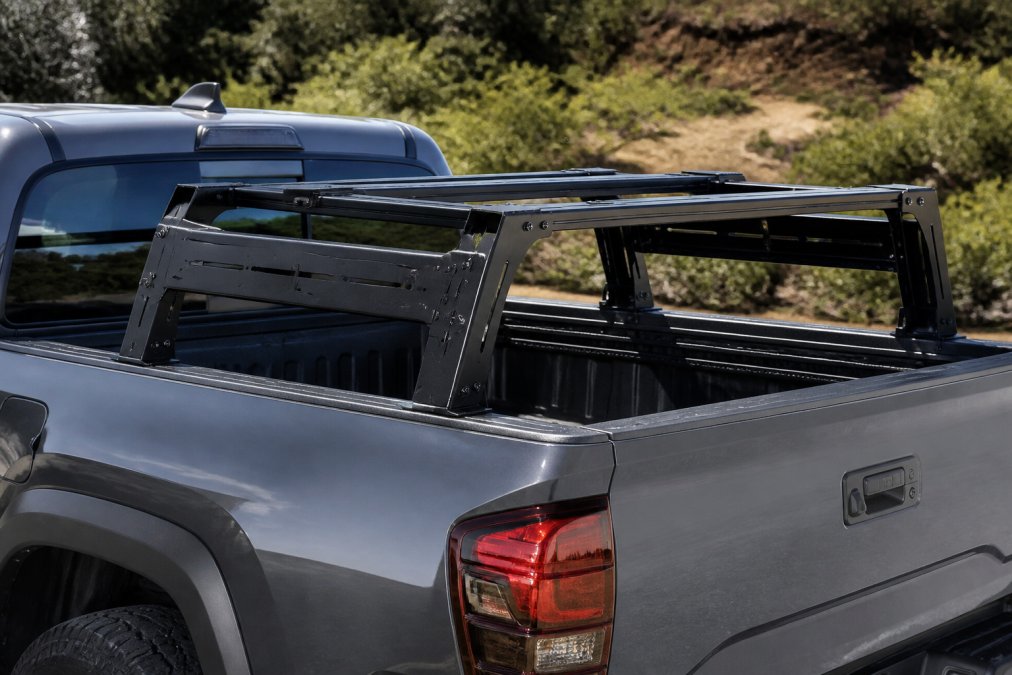
The Thor system shines when you need flexibility. Want to move your roof tent bracket to clear a tonneau cover? T-slot allows this without additional hardware. Limitations emerge with extreme loads. The aluminum structure handles typical overlanding gear without issue, but sustained loads exceeding 400 pounds require careful weight distribution.
Rhino-Rack Backbone and Modular Solutions
Rhino-Rack approaches modularity through their Backbone mounting system and complementary components. The Rhino-Rack Backbone Mounting System (JL) ($599.99) creates an interior structure that extends the roof line, allowing roof-mounted cargo without traditional external racks. This design suits Jeep Wranglers particularly well.
The Backbone connects three mounting plates on each side of the hard top to the vehicle's interior frame, distributing weight through the entire roof structure rather than concentrating it at specific points. The system handles up to 120kg (264 pounds) of static load, sufficient for most roof tent and cargo combinations.
The Rhino-Rack RCL Locking Legs ($199.99 for a set of four) reduce wind resistance and increase security with key-locking mechanisms. This modular ecosystem means you're not locked into a single configuration.
| System | Starting Price | Best For | Load Capacity | Material |
|---|---|---|---|---|
| Thor Tacoma Rack | $749.00 | Toyota Tacoma platforms | 300-400 lbs | Aluminum extrusion |
| Rhino-Rack Backbone | $599.99 | Jeep Wrangler JL | 264 lbs | Aluminum + steel |
| DIY T-Slot Build | $400-800 | Custom configurations | Varies | Aluminum extrusion |
| Fixed-Point Steel Racks | $600-1,200 | Heavy-duty loads | 400-600 lbs | Welded steel |
DIY Overland Bed Rack Build: When to Go Custom
Not every overlander needs a pre-engineered system. DIY bed rack builds offer unmatched customization, potentially lower total cost, and the satisfaction of understanding every component. The trade-off involves time investment, tool requirements, and the risk of design errors.
T-Slot Aluminum Profiles and CNC-Machined Components
T-slot aluminum extrusion provides the foundation for most DIY builds. These modular profiles, typically 40x40mm or 45x45mm cross-section, feature channels on all four sides that accept T-nuts and fasteners. A basic DIY rack using T-slot profiles costs $400-600 in materials.
The real advantage emerges when you need non-standard configurations. A vehicle with an unusual bed length, specific accessory clearance requirement, or custom weight distribution needs becomes straightforward with T-slot design. CNC-machined components eliminate the weak points where welded systems often fail. A bracket machined from solid stock has no heat-affected zones or internal stresses from welding.
Installation Complexity and Tools Required
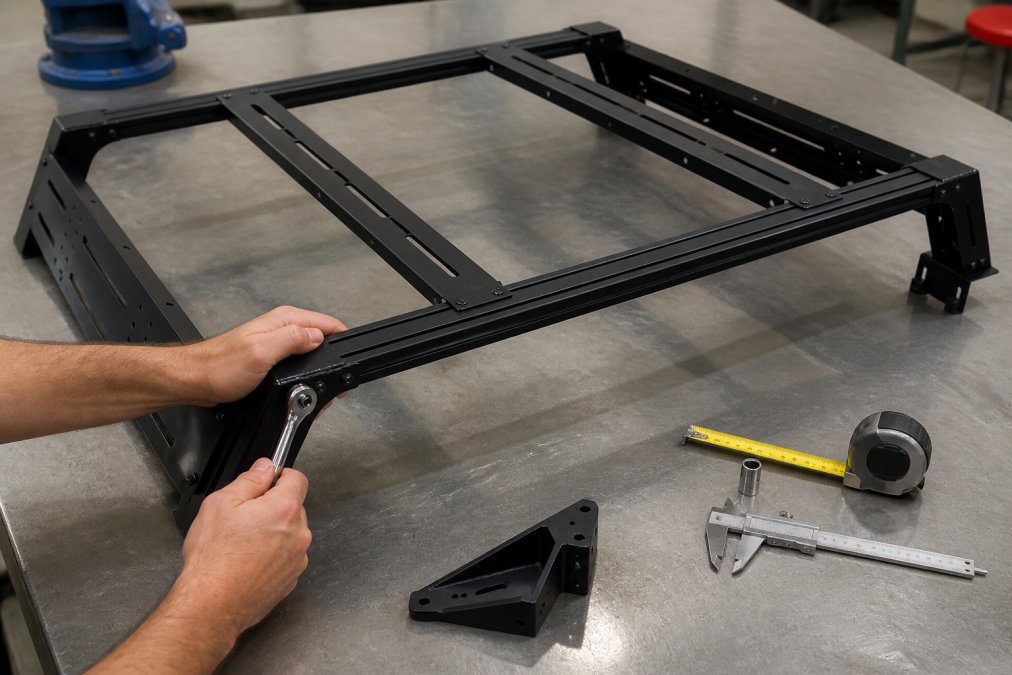
A DIY build demands precision. Misalignment of T-slot extrusion by even 1/4 inch creates structural problems that compound across the full system. Essential tools include a drill press (or access to one), socket set, measuring calipers, and a quality level.
Assembly typically requires 8-12 hours for someone with mechanical aptitude. The biggest installation challenge involves mounting the completed rack to your truck. You're bolting to the vehicle's bed rails, which requires drilling holes through the rails and into the frame.
Total Cost of Ownership: Pre-Engineered vs DIY
Comparing upfront cost misses the real financial picture. A $600 pre-engineered rack that lasts five years costs $120 annually. A $400 DIY build that requires replacement in two years costs $200 annually. Pre-engineered systems from established manufacturers carry warranty protection. If a component fails during normal use, the manufacturer replaces it. This safety net matters when you're thousands of miles from home.
The labor cost for DIY installation varies dramatically. If you have workshop access and mechanical skills, labor cost approaches zero. If you need to outsource machining, drilling, and installation, labor can exceed material costs. Pre-engineered systems offer another advantage: proven designs tested on thousands of vehicles with real-world failure data. The most cost-effective approach for many overlanders involves hybrid solutions, purchase a pre-engineered base system and supplement it with DIY accessories.
Mounting Accessories and Gear Integration
The best bed rack system is only as capable as the accessories you mount to it. T-slot systems excel at accessory integration. Roof tent brackets, gear baskets, water container mounts, and recovery equipment all attach through T-nuts and fasteners. This standardized interface means you can mix components from different manufacturers.
Fixed-point racks limit you to pre-designed accessory combinations. As your overlanding needs evolve, fixed-point systems often require supplementary mounts that don't integrate cleanly. Vibration resistance in accessory mounting matters more than most overlanders realize. Well-designed mounting systems include vibration-dampening features, rubber isolators, or friction-fit components that prevent micro-movement.
When evaluating a bed rack alternative, examine the ecosystem of available accessories. A system with dozens of compatible add-ons offers more long-term value than a system with limited options.
Conclusion
Choosing a bed rack alternative to Xtrusion Overland systems requires understanding the trade-offs between weight, durability, cost, and customization. Aluminum extrusion modular systems like the Thor Bed Rack for Tacoma ($749.00) deliver flexibility and lighter weight. Rhino-Rack's modular solutions, including the Backbone Mounting System ($599.99) and complementary components like the Reconn-Deck Bar Roof Top Tent Bracket Kit ($96.99), offer proven durability and ecosystem integration. DIY builds provide customization at the cost of time and technical complexity.
Precision Upgrades stocks these proven alternatives and can help you select the right system for your specific vehicle and overlanding plans. The rack you choose today determines what's possible on the trail tomorrow. Invest in quality, understand your load requirements, and match materials to your environment.
Frequently Asked Questions
What are the best modular bed rack alternatives to Xtrusion Overland?
Thor Bed Racks and Rhino-Rack systems are top alternatives. The Thor Bed Rack for Tacoma 05-21 ($749) offers mid-height configuration with strong load capacity. Rhino-Rack's Backbone system ($599.99) provides interior mounting for Jeep JL Wranglers with up to 264 lb capacity. Both use aerospace-grade aluminum and support tonneau cover compatibility. Choose based on your vehicle model and whether you need bed-mounted or roof-mounted solutions.
How do aluminum extrusion racks compare to steel bed racks for overlanding?
Aluminum extrusion racks weigh 30-40% less than steel equivalents while maintaining comparable load capacity, reducing fuel consumption on long trips. Steel racks offer superior vibration resistance and durability in extreme temperatures but require regular maintenance to prevent rust. Aluminum systems like T-slot configurations allow modular customization and accessory integration without welding. For serious overlanding, aluminum extrusion typically wins on weight-to-strength ratio and field performance, especially for extended backcountry trips where payload matters.
Can I build a DIY bed rack using T-slot aluminum profiles?
Yes, DIY T-slot aluminum bed racks are feasible if you have welding skills or access to CNC machining for bracket fabrication. You'll need aerospace-grade aluminum extrusion, billet mounting hardware, and precise measurements for your truck bed. The advantage is full customization and potential cost savings. Disadvantages include installation complexity, tool requirements, and structural integrity risks if load calculations are incorrect. Most overlanders choose pre-engineered systems like Thor or Rhino-Rack to avoid these challenges and ensure warranty coverage.
What should I consider when choosing an overland bed rack?
Prioritize load capacity (static vs dynamic weight ratings), material durability for your climate, compatibility with tonneau covers or roof tents, and installation difficulty. Verify mounting hardware quality and vibration resistance for rough terrain. Consider total cost of ownership including accessories like the Rhino-Rack Reconn-Deck Bracket Kit ($96.99) for roof tent mounting. Check whether the system integrates with your existing overlanding gear and if the manufacturer offers field-tested designs backed by real customer reviews from serious trail use.
This article was written using GrandRanker