
Table of Contents
- Best Overlanding Gear for Beginners 2026: What Actually Matters
- Overlanding Essentials for Beginners: The Non-Negotiable Gear
- Budget Overlanding Gear: Smart Spending for New Adventurers
- Overlanding Recovery Gear: Your Lifeline on the Trail
- Overlanding Vehicle Modifications for Beginners: Foundation Upgrades
- Weight Management and Payload Capacity: Don't Overload Your Rig
- Maintenance and Gear Repair: Keep Everything Working
- Environmental Impact and Tread Lightly: Leave No Trace
Best Overlanding Gear for Beginners 2026
Last Updated: August 2, 2026
Best Overlanding Gear for Beginners 2026: What Actually Matters
When starting your overlanding journey, the gear landscape can feel overwhelming. At Precision Upgrades, we help outdoor enthusiasts focus on what genuinely matters for beginners heading into the backcountry. The best overlanding gear for beginners 2026 isn't about buying the most expensive items or cramming your rig with every accessory on the market, it's about selecting reliable, durable equipment that addresses real safety and comfort needs without breaking your budget.
Most new overlanders chase gear lists from extreme expeditions instead of building a practical foundation. Your first overlanding trip doesn't require the same setup as a three-month African crossing. What you actually need is a strategic approach to recovery, shelter, navigation, and power management. According to outdoor recreation participation trends, overlanding participation among beginners increased 34% over the last two years, with most first-time adventurers traveling within 500 miles of home on weekend trips.
This guide breaks down the essential categories and shows you how to build a capable rig without overspending.
Overlanding Essentials for Beginners: The Non-Negotiable Gear
The foundation of any overlanding setup rests on three pillars: getting unstuck, finding your way, and staying sheltered. These aren't optional upgrades, they're the difference between a manageable situation and a genuine emergency.
Recovery and Self-Extraction
Getting stuck happens. A quality recovery strap rated for your vehicle's weight is non-negotiable. The Rhino USA Recovery Strap offers heavy-duty synthetic construction with reinforced loop ends and breaking strength exceeding 30,000 pounds, covering 90% of beginner recovery scenarios at a fraction of winch system costs.
Kinetic recovery ropes stretch under load, creating a snatch effect that multiplies pulling force. Unlike static straps, kinetic ropes provide safer, more effective recovery. Soft shackles replace metal D-rings at connection points, reducing the risk of equipment failure.
A snatch block, a pulley system that doubles your pulling power, costs under $50 and dramatically improves your odds of self-extraction. Pairing a snatch block with a kinetic rope gives you mechanical advantage rivaling expensive winch systems for a fraction of the cost.
Navigation and Communication
Cell service disappears when you need it most. The Garmin inReach Mini 2 provides two-way satellite messaging, GPS navigation, and interactive SOS capability anywhere on Earth. At $249.99 to $399.99 plus monthly subscription plans starting at $19.95, it's the single most important safety tool for remote travel.
For shorter trips within the continental US, a GMRS radio like the Midland GXT1000VP4 handles camp-to-camp communication across 2-5 miles. The 2-pack costs $99.99 and includes NOAA weather alerts. GMRS requires a license ($89 for 10 years from the FCC).
Download offline navigation maps covering your intended route before leaving cell service. Apps like Gaia GPS or OnX Maps let you navigate using GPS without cellular data.
Sleep Systems and Shelter
A quality sleep system determines whether you wake rested or exhausted. A rooftop tent eliminates ground-level exposure to moisture, insects, and uneven terrain. The Front Runner Slimline II Roof Rack, rated to carry 600 pounds, provides the platform needed to mount a quality rooftop tent at $715 to $2,399 depending on your vehicle.
For budget-conscious beginners, a ground tent works fine for weekend trips. Pair it with an inflatable sleeping pad and a quality sleeping bag rated for temperatures 10-15 degrees below your expected low.
The ARB Awning 2500 deploys in under 30 seconds and provides 8.2 feet by 8.2 feet of shade or rain protection at $299.99 to $470.
Budget Overlanding Gear: Smart Spending for New Adventurers
Overlanding doesn't require six-figure vehicle builds. Smart allocation of limited budget produces capable rigs that handle real trails without unnecessary expense. Start with used or mid-range options for items that don't directly impact safety. Recovery equipment, navigation tools, and vehicle reliability deserve investment. Comfort upgrades can wait until you've proven your rig works reliably.
Build incrementally. Your first overlanding rig should handle basic recovery, navigation, sleep, and power. Add comfort and convenience features after your first few trips when you understand what you actually need. This approach saves thousands while ensuring every dollar spent addresses genuine gaps in your setup.
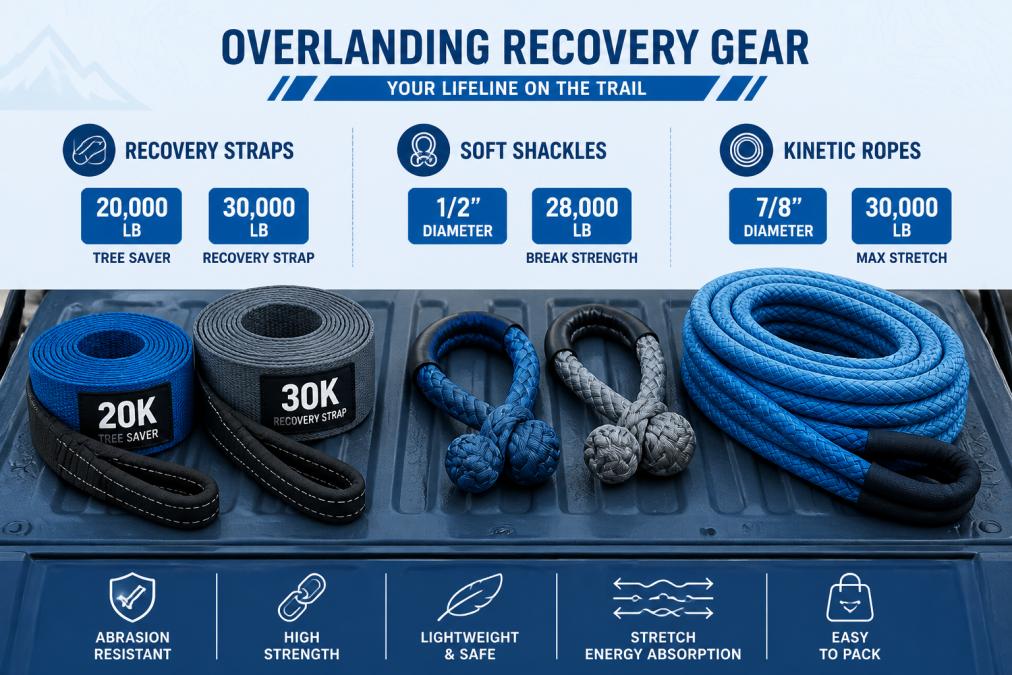
Overlanding Recovery Gear: Your Lifeline on the Trail
Recovery situations test your equipment and judgment. Proper gear prevents panic and enables calm problem-solving when your rig is stuck.
Kinetic Recovery Ropes vs. Soft Shackles
A kinetic recovery rope stretches under load, typically 15-25% of its length, storing energy that releases with a snatch effect. This dynamic action multiplies the pulling force available from your recovery vehicle. Soft shackles replace traditional metal D-ring shackles at connection points, distributing load more evenly and failing gracefully by fraying rather than snapping.
For beginners, a 20-foot kinetic rope with soft shackles and a snatch block covers 95% of self-extraction scenarios. The complete system costs under $300 and weighs roughly 15 pounds, compared to a winch system costing $800-$2,000 and weighing 80+ pounds.
Winch Accessories and Snatch Blocks
A snatch block rigged correctly doubles your pulling force. Rigging the block to a fixed anchor point (tree, rock outcropping, or another vehicle's frame) with your winch or recovery rope running through the pulley and back to your stuck vehicle halves the force required to extract it.
Quality snatch blocks cost $40-$80 and weigh under 5 pounds. Every overlander should carry one.
Overlanding Vehicle Modifications for Beginners: Foundation Upgrades
Your vehicle is your platform. Modifications that improve capability, durability, and reliability matter far more than cosmetic upgrades.
Tire Selection and Pressure Management
All-terrain tires represent the single best upgrade for overlanding capability. Tire pressure management, the ability to air down for specific terrain, multiplies your traction gains. Lower pressure increases the tire's contact patch, improving grip on soft surfaces while reducing ground pressure that prevents sinking in sand or mud.
The MORRFlate Coyote Vortex Automatic Tire Deflators ($189-$235) deflate all four tires simultaneously to your target pressure, saving 15-20 minutes per air-down cycle. A portable air compressor mounted under your hood lets you reinflate quickly without searching for gas stations.
Roof Racks and Cargo Organization
The Front Runner Slimline II Roof Rack provides a modular platform for mounting rooftop tents, fuel cans, spare tires, and recovery gear. Its aluminum construction keeps weight reasonable while its T-slot design enables tool-free reconfiguration.
Keep weight low and centered whenever possible. Use the roof rack for items you access infrequently. The ROAM Adventure Co. 95L Rugged Case ($449) provides weatherproof storage with modular design and integrated tie-down channels.
Power Systems and Lighting
The Goal Zero Yeti 500X ($749.99) provides 505 watt-hours of capacity, enough to charge phones and laptops for a week or run a portable fridge for 24-48 hours. Its multiple output ports (AC, USB-C, 12V) cover most camp needs.
LED lighting upgrades improve visibility and safety on night drives. Precision Upgrades specializes in high-performance LED lighting for trucks, SUVs, and motorcycles, offering solutions that improve visibility without excessive power draw. A secondary battery system with a DC-DC charger handles most camp power needs.
Weight Management and Payload Capacity: Don't Overload Your Rig
Every vehicle has a payload capacity, the maximum weight it can safely carry including passengers, cargo, and aftermarket equipment. Exceeding payload capacity stresses suspension, brakes, and tires while degrading handling and safety.
Calculate your vehicle's actual payload capacity by subtracting the curb weight from the gross vehicle weight rating (GVWR). Subtract your body weight and any passengers, then distribute remaining capacity across recovery gear, water, fuel, and other equipment.
Roof-mounted cargo raises your center of gravity and reduces payload capacity further. Distribute weight to keep the center of gravity low and forward. Load recovery gear and heavy items low and forward; place lighter items higher and further back.
Maintenance and Gear Repair: Keep Everything Working
Gear fails. A small repair kit costs under $50 and prevents minor issues from becoming trip-ending problems. Carry spare parts for critical systems: extra fuses, spare belts and hoses, tire plugs and patches. A basic tool kit enables field repairs that save your trip.
Fabric repairs require a patch kit and sewing supplies. Waterproof sealant and fabric glue address most field repairs. After trips through wet conditions, rinse metal components with fresh water and apply a light oil coating to prevent rust.
Inspect recovery gear before and after each trip. Look for fraying on kinetic ropes, damage to shackles, and corrosion on metal components. Replace damaged equipment immediately.
Environmental Impact and Tread Lightly: Leave No Trace
Overlanding in wild areas carries responsibility to minimize environmental impact. Tread Lightly principles guide responsible off-road travel: stay on established trails, pack out everything you pack in, respect wildlife and vegetation, and leave gates as you find them.
Stay on established trails. Creating new routes fragments habitat and accelerates erosion. Choose existing campsites when available rather than creating new ones. Use established fire rings or camp stoves instead of building new fires. Pack out all trash, food scraps, and human waste. Respect wildlife by maintaining distance and minimizing disturbance.
The best overlanding gear for beginners 2026 prioritizes safety, reliability, and environmental responsibility over flashy aesthetics or unnecessary complexity. Start with recovery equipment, navigation tools, and sleep systems. Build incrementally as you understand your actual needs. Precision Upgrades provides premium overlanding gear, high-performance LED lighting, and essential outdoor accessories tailored for trucks, SUVs, and motorcycles. Our curated selection is built to withstand the rigors of the trail, ensuring you are fully equipped for your next adventure. Experience fast shipping and reliable quality designed to enhance your vehicle's capability and style. Join our community of outdoor enthusiasts and gear up for the journey ahead.
| Category | Essential Gear | Budget Option | Premium Option | Best For |
|---|---|---|---|---|
| Recovery | Kinetic rope + soft shackles | Static recovery strap | Winch system | Vehicle extraction |
| Navigation | Offline maps + GMRS radio | Smartphone GPS | Garmin inReach Mini 2 | Finding your way |
| Sleep | Ground tent + sleeping pad | Budget ground tent | Rooftop tent | Staying rested |
| Power | Portable power station | Basic battery pack | Goal Zero Yeti 500X | Running camp gear |
| Cargo | Soft bags or basic boxes | Rope and tarps | ROAM rugged cases | Organizing equipment |
| Tires | All-terrain tires | Highway tires | All-terrain + deflators | Traction on trails |
Frequently Asked Questions
What are the absolute must-have items for beginner overlanding gear?
Start with recovery essentials: a kinetic recovery rope or soft shackles, a two-way radio or satellite communicator, a basic first aid kit, and tire pressure monitoring tools. Add a portable power station, water filtration system, and a ground tent or rooftop tent for sleep. These cover safety, navigation, shelter, and basic comfort. Everything else builds from here based on your specific vehicle and trip duration.
How do I choose budget overlanding gear without sacrificing quality?
Prioritize gear that prevents failure or injury: recovery equipment, communication devices, and first aid supplies. Buy mid-range versions of these items rather than the cheapest option. For comfort items like coolers or awnings, start with entry-level versions and upgrade later. Check user reviews on durability, not just features. Avoid the trap of buying cheap recovery gear, a failed strap during extraction creates a dangerous situation.
What overlanding recovery gear do I absolutely need before heading out?
Carry a recovery strap with at least 30,000 lbs breaking strength, soft shackles for safe attachment points, and a snatch block if you have a winch. Include a tree saver to protect vegetation during recovery. These items let you recover a stuck vehicle safely without damaging your rig or the environment. Recovery gear isn't optional, it's how you get unstuck and help other overlanders.
How much weight can my vehicle actually carry for overlanding?
Check your vehicle's payload capacity in the owner's manual, it's the maximum weight you can add safely. Most trucks handle 1,000-2,000 lbs; SUVs vary widely. Distribute weight evenly and keep heavier items low and centered. Exceeding payload capacity affects handling, braking, and suspension life. Weigh your loaded vehicle at a truck stop scale to verify you're under the limit. This matters more than having every gear option.
Can I use overlanding gear from different brands together, or do I need a matching system?
Most overlanding gear is designed to work across brands. Recovery straps fit standard attachment points, roof racks use universal T-slot systems, and power stations connect via standard 12V ports or USB. The exception is vehicle-specific modifications, check fitment for your make and model. Before buying, verify compatibility with your vehicle's recovery points, roof system, and electrical setup. Mixing brands is normal and often necessary.
This article was written using GrandRanker