
Table of Contents
- Planning Your Truck Bed Storage System
- Essential Tools and Materials for Your Build
- Measuring Your Truck Bed and Creating a Cut List
- Heavy Duty Drawer Slides for Truck Bed Storage
- Truck Bed Storage Ideas for Overlanding Adventures
- DIY Truck Bed Platform Build: Frame and Installation
- Weatherproofing, Securing, and Finishing Your System
- Conclusion
Last Updated: August 11, 2026
Planning Your Truck Bed Storage System
A solid truck bed storage system transforms wasted vertical space into organized, accessible gear storage. Most truck owners leave 60-70% of their bed's potential unused. Start by defining what you'll actually store: camping gear, tools, recovery equipment, water containers, or a combination. Weight matters, every 100 pounds of storage adds payload burden that affects your truck's suspension, braking, and fuel economy.
Consider whether you want a fixed system or modular setup. Fixed builds are more rigid and secure but commit you to one configuration. Modular systems let you swap components, remove the entire structure for truck bed use, or reconfigure for different trips.
Essential Tools and Materials for Your Build
You don't need a full woodworking shop. A circular saw, drill, level, and measuring tape cover 80% of the work. Add a miter saw if you're cutting angles, and a pocket hole jig if you want joints that won't rattle loose after 500 miles of trail.
Core tools required:
- Circular saw or miter saw
- Cordless drill/driver
- Tape measure (25-foot minimum)
- Speed square or combination square
- Level (24-inch preferred for bed width)
- Clamps (at least 4)
- Countersink drill bit set
- Pocket hole jig (optional but recommended)
Material selection is critical. Standard construction plywood absorbs water and delaminates within a season. Marine-grade plywood costs more but resists rot and holds fasteners better. For a truck bed storage system, 3/4-inch marine plywood for the frame and 1/2-inch for drawer bottoms gives you structural integrity without excessive weight.
Heavy duty drawer slides are non-negotiable. Standard hardware store slides bind under load or fail after a few thousand miles of vibration. Look for slides rated for at least 100-pound capacity per pair. Full-extension slides let you access the back of your drawers without removing the entire unit.
Fasteners matter. Stainless steel bolts, lag screws, and carriage bolts resist corrosion better than galvanized alternatives. Use construction adhesive rated for wood-to-wood bonding alongside mechanical fasteners.
Material checklist for a typical build:
- Marine-grade plywood (3/4-inch and 1/2-inch sheets)
- Heavy duty full-extension drawer slides (100+ lb capacity)
- Stainless steel bolts, lag screws, and fasteners
- Construction adhesive (wood-rated)
- Wood sealant or exterior polyurethane
- Weatherproofing tape or gasket material
- Mounting brackets and L-brackets
- Drawer handles or rope pulls
Measuring Your Truck Bed and Creating a Cut List
Precision here prevents expensive mistakes later. Measure your truck bed length (inside edge to inside edge), width, and depth. Don't rely on manufacturer specs, actual dimensions vary due to bedliner thickness, tie-down rail placement, and manufacturing tolerance.
Measure at three points along the length: near the cab, center, and tailgate. Beds aren't always perfectly rectangular. A difference of half an inch between points means your drawers will bind on one side. Account for this by building slightly undersized (1/4-inch clearance on each side is safe).
Create a detailed cut list before buying materials. List every piece with dimensions: frame members, drawer sides, bottoms, backs, and dividers. Calculate total material weight. A typical 4-drawer system in marine plywood weighs 150-200 pounds empty. Add your gear and you're easily at 300-400 pounds. Verify this fits within your truck's payload capacity (found on the driver's door jamb sticker).
Heavy Duty Drawer Slides for Truck Bed Storage
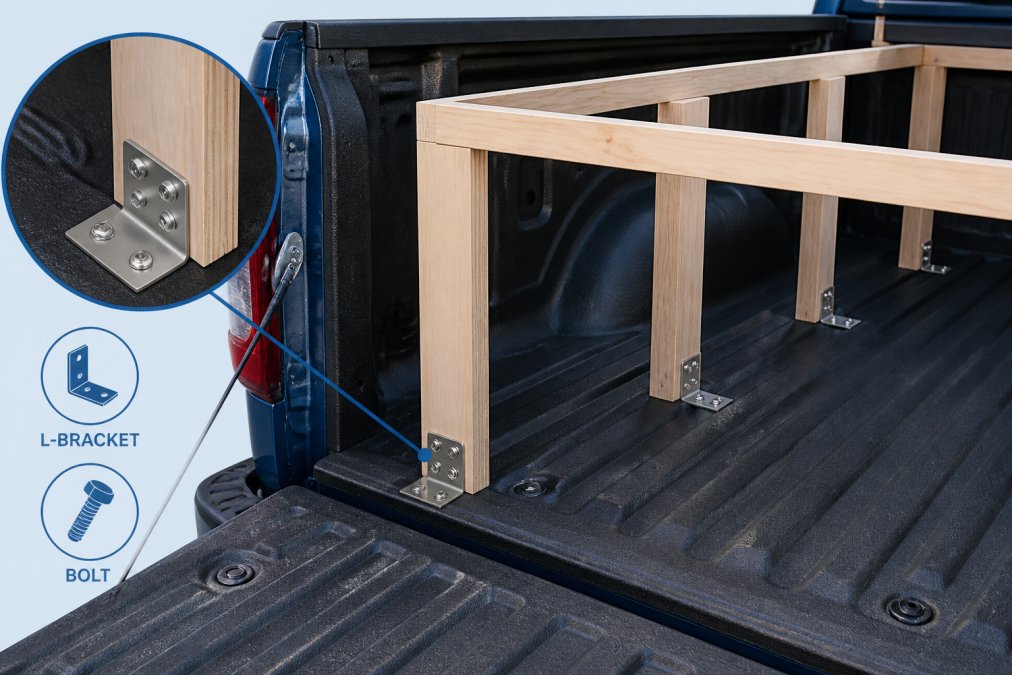
This is where your truck bed storage system lives or dies. Cheap slides bind, fail under load, or create rattles that drive you insane. Heavy duty drawer slides designed for truck bed applications handle vibration, weight, and temperature swings that standard hardware can't manage.
Full-extension slides are worth the extra cost. They let you pull drawers completely out, accessing everything inside without reaching blindly. Look for slides rated for at least 100 pounds per pair. Many truck bed builds carry 150+ pounds per drawer, so slides rated for 150+ pounds give you safety margin and longer service life.
Mounting matters as much as the slides themselves. Slides must be perfectly parallel or your drawers will bind. Use a level when installing. Bolts should be tightened in a specific sequence: tighten one bolt halfway, then the opposite bolt halfway, then return to full tightness.
Precision Upgrades carries DCI Rollercam L Track systems that work with heavy duty drawer slides. The L Track mounts to your truck bed and accepts sliding brackets, giving you flexibility to adjust drawer positions without drilling new holes. The DCI Rollercam L Track Kit - 6' includes strap combinations that secure gear to the track system, preventing shift during off-road driving.
Truck Bed Storage Ideas for Overlanding Adventures
Your truck bed storage system should serve your actual adventures. Overlanding requires specific organization: fuel, water, recovery gear, and camp equipment all need quick access.
Consider a two-tier approach. Lower drawers (12-18 inches tall) hold heavy items: tools, water, fuel. Upper drawers (6-12 inches tall) hold lighter gear: camping supplies, lighting, spare parts. This weight distribution keeps your center of gravity lower and improves truck handling.
Vertical dividers inside drawers prevent gear from shifting during rough driving. Many overlanders add a sleeping platform above the storage drawers, using otherwise-wasted vertical space while keeping your sleeping surface clean and level.
For truck bed storage ideas specific to overlanding, think about access patterns. Your most-used gear should be in the easiest-to-reach drawer. Recovery equipment needs quick access but isn't used constantly, place it in a middle drawer.
Weatherproofing becomes critical on extended trips. Seal all joints with exterior-grade caulk. Drill small drain holes in drawer bottoms so water doesn't accumulate. Add weatherstripping around drawer fronts to reduce dust infiltration.
The Precision Upgrades 70L Overland Gear Box Gray complements a DIY truck bed storage system by providing additional sealed storage for sensitive gear. At $245, it offers weather protection for electronics, documents, and items that can't handle moisture.
DIY Truck Bed Platform Build: Frame and Installation
The frame is your truck bed storage system's skeleton. Start with the perimeter frame. Cut four pieces of 2x4 lumber to length (bed length minus 1 inch for clearance). Assemble them into a rectangle using bolts, not nails. Use 1/2-inch stainless steel bolts with lock washers at each corner.
Level this perimeter frame before securing it to the truck bed. Shim with steel shims if needed. An unlevel frame cascades into binding drawers and uneven load distribution.
Vertical supports bolt to this perimeter frame at 24-inch intervals. These 2x4 posts typically run 12-18 inches tall, depending on your drawer height preferences. Bolt the entire frame assembly to your truck bed using lag screws or through-bolts into the bed's structural points. Most truck beds have reinforced areas near the wheel wells and under the cab, these are your anchor points.
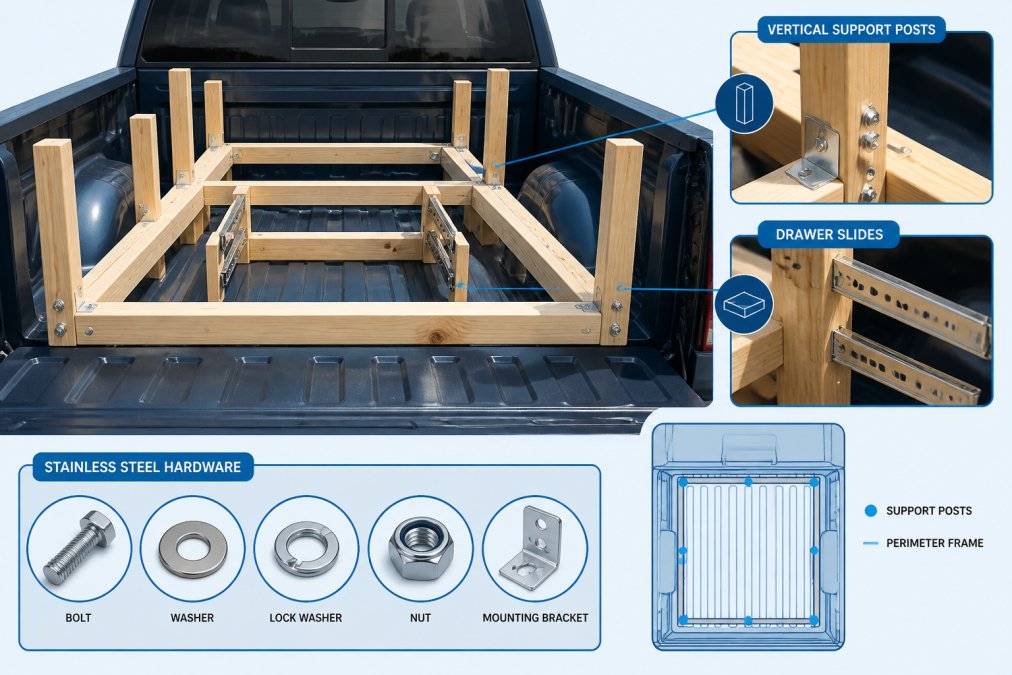
Test the frame for racking (twisting). Push on one corner, the frame should be solid. If it flexes, add diagonal bracing or additional bolts. Once the frame is solid, install your drawer slides. Slides must be perfectly parallel or drawers will bind.
Weatherproofing, Securing, and Finishing Your System
A truck bed storage system exposed to weather deteriorates quickly without protection. Seal all joints with exterior-grade polyurethane caulk. Pay special attention to where drawer sides meet the bottom and where the frame contacts the truck bed.
Apply exterior wood sealant or polyurethane to all exposed surfaces. Two coats are better than one. Reapply every 12-18 months if your truck spends significant time outdoors.
Weatherstripping around drawer fronts reduces dust infiltration. Self-adhesive foam weatherstripping works well and costs less than $20 for an entire system.
Drainage is critical. Drill 1/4-inch holes in drawer bottoms at the lowest point. This allows water that gets inside to drain rather than pooling.
Locking mechanisms prevent theft and keep drawers from opening during rough driving. Simple key locks on drawer fronts work, but integrated locking systems are more secure. Add soft-close dampeners if your budget allows, they prevent drawer slamming and reduce wear on slides.
For maximum security and weather protection, Precision Upgrades offers the 50L Overland Gear Box Gray at $245, which provides sealed storage for high-value or moisture-sensitive items.
Building a truck bed storage system requires planning, precision, and patience. The difference between a system that works flawlessly for years and one that fails prematurely comes down to material selection, proper installation, and weatherproofing. Start with accurate measurements, invest in heavy duty drawer slides rated for your actual load, and seal every joint against moisture.
At Precision Upgrades, we support DIY builders with the mounting hardware and weatherproofing solutions that make systems last. Our DCI Rollercam L Track Surface Mount - 2 Pack - 48" provides the flexible mounting points your custom build needs. Whether you're storing overlanding gear for weekend trips or outfitting a vehicle for months of backcountry travel, quality hardware and thoughtful design ensure your truck bed storage system performs when it matters most. Join our community of outdoor enthusiasts and get 15% off your first order with newsletter signup, gear up for your next adventure today.
Frequently Asked Questions
What materials are best for building a weather-resistant truck bed storage system?
Marine-grade plywood (3/4 inch minimum) resists moisture better than standard plywood. Pair it with stainless steel fasteners and hardware that won't rust. Apply polyurethane sealant or marine epoxy to all joints and exposed wood surfaces. For drawer boxes, use exterior-grade plywood. Consider aluminum L-track systems like the DCI Rollercam for secure, weather-resistant cargo management without drilling into your truck bed.
How do I know which drawer slides work best for heavy-duty truck bed storage?
Look for full-extension drawer slides rated for at least 100 pounds per pair. Ball-bearing slides handle rough terrain better than friction slides. Heavy duty drawer slides for truck bed applications should have a 1.5-inch or wider profile for stability. Verify the extension length matches your planned drawer depth. Stainless steel or powder-coated steel resists corrosion from moisture and road salt.
Can I build a truck bed storage system without drilling into the truck?
Yes, using L-track surface mount systems. These bolt directly to existing bed rails or use clamp-style fasteners that don't require drilling. Products like the DCI Rollercam L Track Surface Mount eliminate permanent holes. However, permanently bolted systems are more secure for off-road use. If you must avoid drilling, ensure your mounting system can handle payload shifts during acceleration, braking, and rough terrain.
What's the typical cost to build a DIY truck bed storage system versus buying pre-made?
A quality DIY build costs $400-800 depending on size and materials. Pre-made systems range from $500-2,000+. DIY saves money but requires time and tools. Hybrid approaches, like using the 70L Overland Gear Box ($245) paired with custom platform framing, balance cost and convenience. Factor in your time, tool rental, and potential mistakes when comparing to ready-made solutions.
How do I secure a truck bed storage system to prevent shifting during off-road driving?
Use L-track systems with locking carabiners or cam buckles rated for your cargo weight. Bolt the frame to truck bed rails at multiple points. Add cross-bracing between frame components to prevent rocking. Distribute weight evenly, heavier items forward, lighter items toward the cab. Test the system on road before heading off-road. Consider tie-down straps across drawer tops as secondary security.
What thickness of plywood should I use for a truck bed platform that sleeps two people?
Use 3/4-inch marine-grade plywood for the sleeping surface and frame components. This thickness handles 400+ pounds distributed across a platform without sagging. Thinner plywood (1/2-inch) works for drawer bottoms and non-load-bearing panels. Check your truck's payload capacity before adding weight. A full sleeping platform with frame typically adds 150-250 pounds depending on size and materials.
How do I design a truck bed platform that allows for sleeping without removing the drawers?
Build the drawer system 12-18 inches high, then create a hinged or removable platform deck on top. This keeps gear accessible underneath while providing a flat sleeping surface. Ensure the platform is stable and won't shift under body weight. Use heavy-duty hinges if you plan to fold it up. Account for headroom and ventilation. Some builders use a separate sleeping platform that sits atop the drawer boxes for flexibility.
This article was written using GrandRanker