
Table of Contents
- Essential Overlanding Gear for Beginners: The Six Core Systems
- Shelter and Sleeping Systems
- Recovery and Safety Gear: What Actually Saves You on the Trail
- Power and Energy Management for Extended Trips
- Water Storage, Filtration, and Cooking Setup
- Navigation, Communication, and Emergency Preparedness
- Budget Overlanding Gear Checklist for Beginners
- Overlanding Vehicle Setup for Beginners: Foundation Before Gear
Last Updated: July 31, 2026
Essential Overlanding Gear for Beginners: The Six Core Systems
Planning your first overland adventure can feel overwhelming with endless gear recommendations online. Essential overlanding gear for beginners 2026 isn't about buying everything at once, it's about understanding the six interconnected systems that keep you safe, comfortable, and mobile miles from civilization.
Most first-time overlanders chase flashy gear without understanding how it fits into their actual setup. A rooftop tent means nothing without proper weight distribution. A winch is useless if your vehicle can't handle the payload. The six systems, shelter, recovery, power, water and cooking, navigation and communication, and vehicle foundation, work together as an integrated whole. Neglect one, and the others become harder to use effectively.
Why System-Based Thinking Matters for New Overlanders
Approaching gear as isolated purchases rather than interconnected systems is where most beginners stumble. When you think in systems, you make smarter tradeoffs. A lighter sleeping system means you can carry more water filtration capacity. Better power management means you can run a satellite communicator longer.
System-based thinking also forces you to confront payload reality early. Your vehicle has a maximum weight it can safely carry. Every system you add consumes some of that budget. By thinking in systems, you allocate your payload budget strategically rather than discovering halfway through a build that you're overweight.
Shelter and Sleeping Systems
Your shelter system is your foundation for extended trips. Unlike car camping a few miles from the trailhead, overlanding means sleeping in remote areas for weeks.
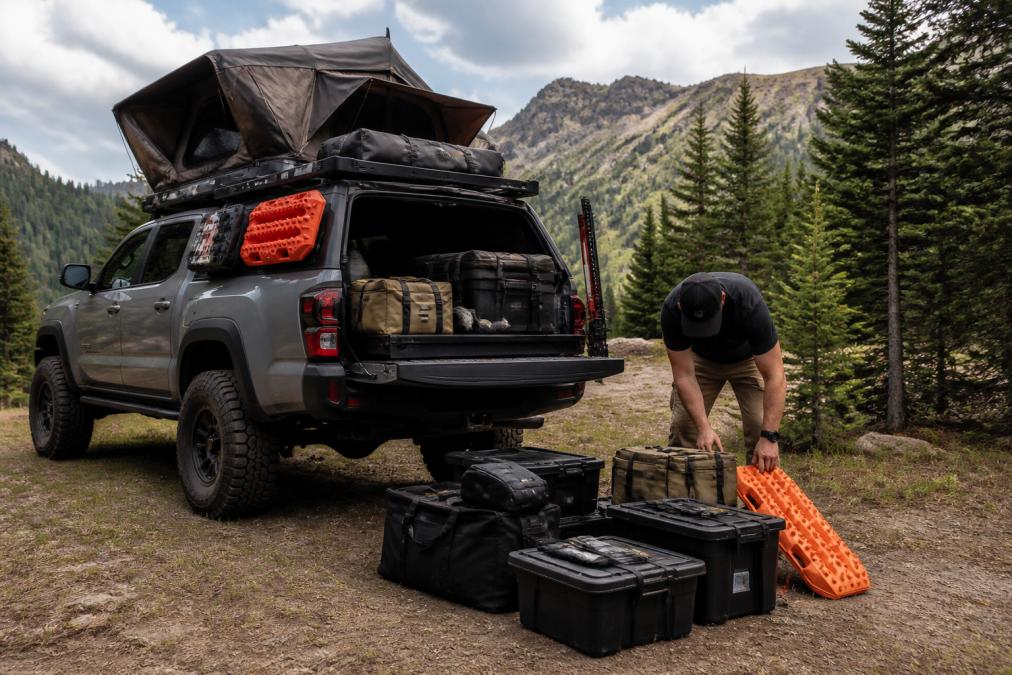
The rooftop tent has become the default choice for good reason: it's quick to deploy, keeps you off the ground away from insects and moisture, and doesn't consume interior vehicle space. Modern rooftop tents pack down to roughly 150-200 pounds and open in under two minutes. The trade-off is that weight sits high on your vehicle, affecting center of gravity and requiring proper roof reinforcement.
Ground-based options, traditional tents, swag bags, or sleeping platforms, offer advantages if your vehicle can't handle rooftop weight or if you want flexibility. A quality freestanding tent in the 4-6 person range weighs 8-12 pounds and costs a fraction of a rooftop tent. For beginners doing weekend trips, a ground tent plus sleeping pad often makes more sense than overcommitting to rooftop infrastructure.
A quality sleeping bag rated for your climate zone prevents the misery of a cold night. A bag rated 10-15 degrees below your expected low ensures you sleep instead of shivering. Sleeping pads provide insulation from ground cold and cushioning.
Recovery and Safety Gear: What Actually Saves You on the Trail
Recovery gear is the difference between a stuck afternoon and a serious problem. If you're driving off-road, you need recovery capability.
Self-Recovery vs. Winch-Based Systems
Self-recovery tools let you extract your vehicle without external help. Kinetic ropes, recovery boards, and snatch blocks work by using your own vehicle's weight and momentum to break free from mud, sand, or soft ground. A kinetic rope stores energy as it stretches, then releases that energy as a spring-back pull.
Winch-based systems mount to your bumper and use an electric motor to pull your vehicle out. A 9,500-pound winch costs significantly more than kinetic rope and recovery boards combined, but it works in situations where self-recovery fails: deep water crossings, steep inclines, or when you're truly buried.
For beginners doing moderate overlanding, self-recovery tools are the right starting point. A kinetic rope, pair of recovery boards, and snatch block kit cost under what a winch alone costs, and you'll develop actual recovery skills.
Recovery also includes safety gear: a first aid kit rated for remote areas, emergency communication device (satellite communicator or personal locator beacon), and fire extinguisher. A satellite communicator lets you call for help when cellular coverage fails. For trips more than a few hours from civilization, one of these is non-negotiable.
Power and Energy Management for Extended Trips
Extended overlanding trips require power management discipline. Your vehicle's alternator can't keep up with modern gear demands. LED lighting, refrigeration, satellite communicators, navigation systems, and camp equipment all draw power. A dual battery system separates auxiliary power from your engine start battery, letting you run camp gear without risking a dead engine battery.
A quality dual battery setup includes a lithium or AGM auxiliary battery (100-200 amp-hours for beginners), a battery isolator or smart relay that charges the auxiliary battery when the engine runs, and properly sized wiring. Lithium batteries cost more but weigh less and charge faster. AGM batteries are cheaper and more forgiving if you accidentally over-discharge them. For a first system, a 100Ah AGM battery with a quality isolator provides reliable power for a week of boondocking.
Solar panels extend your independence from engine charging. A 200-400 watt solar array can replenish a 100Ah battery in a full sunny day if you're running moderate loads.
Power management means knowing your loads. An LED light bar draws 20-30 amps. A portable fridge draws 3-5 amps continuously. A satellite communicator draws 1-2 amps for transmit. Successful overlanders track their loads and manage consumption, turning off lights when not needed and scheduling communication checks during daylight hours when solar can recharge simultaneously.
Water Storage, Filtration, and Cooking Setup
Water is your heaviest consumable. A gallon weighs 8.3 pounds, and a person needs roughly a gallon per day for drinking and basic hygiene. Carrying 7-10 days of water means 60-80 pounds of weight. Rotopax containers or similar hard-sided carriers hold 2-7 gallons and mount on exterior racks. They're easy to access, affordable, and flexible.
Filtration matters because water sources in backcountry areas aren't always clean. A gravity filter removes bacteria and protozoa without requiring pumping. For extended trips, a gravity filter hanging from a tree branch works while you set up camp.
Cooking setup ranges from minimal to elaborate. A single-burner camp stove and small cookware weighs almost nothing and lets you boil water and heat simple meals.
Navigation, Communication, and Emergency Preparedness
Getting lost in a canyon with no cellular service is dangerous. Navigation and communication systems keep you oriented and connected when things go wrong.
A quality GPS unit or navigation app serves as your primary navigation tool. Modern smartphones with offline maps work well for most overlanding. Download maps before you leave cellular coverage using Google Maps, AllTrails, or dedicated overlanding apps like Gaia GPS. A satellite messenger (like Garmin InReach Mini) costs around $350 and lets you send text messages and trigger rescue.
A first aid kit rated for remote locations goes beyond a basic car kit. Include treatment for serious injuries: tourniquets, hemostatic gauze, trauma shears, and a quality splinting system. A wilderness first aid course teaches you how to actually use this gear.
Trail etiquette and Leave No Trace principles keep overlanding accessible for everyone. Pack out everything you pack in. Use established campsites when possible. Filter your greywater before dumping it. Respect private property and closed areas.
Budget Overlanding Gear Checklist for Beginners
Building a complete overlanding setup costs money, but you don't need to spend everything at once. A strategic purchase order means you're always improving your capability rather than discovering critical gaps.
Prioritizing Your First Purchases
Start with recovery and safety gear. A kinetic rope, recovery boards, snatch block, and first aid kit cost under $300 combined and address the highest-risk scenarios.
Next, add shelter and sleeping systems. A quality ground tent ($200-400) and sleeping bag ($150-300) let you sleep safely and comfortably. A sleeping pad ($80-150) prevents ground cold from draining your battery.
Third priority is power and water. A dual battery system ($400-600) and water containers ($100-200) let you stay out longer.
Navigation and communication come next. A smartphone with offline maps costs nothing if you already have a phone. A satellite communicator ($350+) is essential for serious backcountry trips.
Cooking and food storage are last priority. A single-burner stove ($30-50) and basic cookware work fine initially.
Where to Find Quality Gear Without Breaking the Bank
Precision Upgrades carries essential overlanding gear specifically selected for reliability and durability.
Used gear markets offer significant savings, especially for items like rooftop tents and recovery equipment. Facebook Marketplace, eBay, and overlanding-specific forums have active used gear sections. Spreading purchases over several trips lets you test what you actually use before investing in expensive upgrades.
Overlanding Vehicle Setup for Beginners: Foundation Before Gear
Your vehicle is the foundation for everything else. Before buying accessories, you need to understand your vehicle's limitations and capabilities.
Weight Management and Payload Capacity
Every vehicle has a maximum weight it can safely carry: the GVWR (Gross Vehicle Weight Rating). This includes the vehicle itself, passengers, fuel, and all gear. Exceeding GVWR damages suspension, reduces braking effectiveness, and voids your warranty.
Calculate your payload budget before you start buying. Find your vehicle's GVWR in the owner's manual or door jamb sticker. Subtract the vehicle's curb weight. The remaining number is your payload budget. A typical mid-size SUV might have 1,000-1,200 pounds of payload. Subtract 200 pounds for fuel and passengers, and you have 800 pounds for gear. A rooftop tent (150-200 lbs), dual battery system (100-150 lbs), water storage (100-200 lbs), and recovery gear (50 lbs) consumes 400-700 pounds.
Weight distribution matters as much as total weight. Heavy items mounted high raise your center of gravity and reduce stability. Distribute weight toward the center of your vehicle's wheelbase. Many overlanders mount dual batteries and water tanks low and centered rather than on roof racks.
Tire Selection and Ground Clearance
Tire choice dramatically affects off-road capability. All-terrain tires provide better traction in mud, sand, and gravel than highway tires. Most overlanders choose all-terrain tires as a compromise, they work reasonably well in most conditions without being so specialized that they're miserable on paved roads.
Tire size affects ground clearance. Larger tires increase your vehicle's height, improving approach and departure angles. A 33-inch tire provides noticeably better clearance than a 31-inch, but it also increases weight and affects fuel economy. For beginners, staying within your vehicle's factory tire size range keeps costs down.
A tire deflator lets you reduce tire pressure on soft surfaces like sand or mud, improving traction and ride quality. A quality deflator ($50-100) and portable air compressor ($150-300) are essential for serious off-road driving.
Ground clearance is often overstated. Most overlanding happens on rough but passable roads that don't require extreme clearance. Suspension lifts are expensive and complex, they're worth doing only if you're regularly driving terrain that requires them.
Building essential overlanding gear for beginners 2026 means understanding your vehicle's limitations first, then adding systems that enhance capability within your payload and budget constraints. Precision Upgrades provides quality gear specifically selected for reliability in remote conditions. Start with recovery and safety gear, add shelter and sleeping systems, then expand into power and water management. This phased approach builds a capable rig without overwhelming your budget or exceeding your vehicle's payload capacity.
Frequently Asked Questions
What essential overlanding gear do I actually need for my first trip?
Start with the six core systems: shelter (rooftop tent or ground setup), recovery gear (recovery boards, kinetic rope, shackles), power management (dual battery system or solar panel), water storage and filtration, cooking equipment, and navigation/communication tools. Prioritize recovery and safety gear first, these prevent dangerous situations. You don't need everything at once; build incrementally based on trip duration and terrain difficulty.
How do I choose budget overlanding gear without sacrificing quality?
Focus spending on items that directly impact safety: recovery equipment, water filtration, and navigation tools. Look for multi-purpose gear that serves several functions. Quality basics (durable storage, reliable water containers) outlast cheap alternatives. Read reviews from actual users on extended trips. Avoid buying full systems from one brand; mix and match proven components. Many experienced overlanders recommend investing in one premium item per trip rather than spreading budget thin.
What is overlanding recovery gear and why do beginners need it?
Recovery gear includes items that extract your vehicle from difficult terrain: recovery boards for traction, kinetic ropes for dynamic pulling, shackles for secure connections, and air compressors for tire deflation/inflation. Beginners need this because off-road situations, high-centered vehicles, stuck tires, bogged-down frames, happen unexpectedly. Self-recovery systems let you handle problems independently rather than waiting for expensive towing services. Even on mild trails, a basic recovery kit prevents a minor setback from becoming an emergency.
Do I need to upgrade my vehicle before buying overlanding gear?
Yes, vehicle setup comes before gear selection. Check your truck or SUV's payload capacity (found in owner's manual) to know how much gear weight it safely handles. Upgrade all-terrain tires for traction and ground clearance. Consider a dual battery system if you're dry camping or boondocking for multiple days. Many beginners overload vehicles without checking limits, causing suspension damage and safety issues. Your rig's foundation determines what gear you can realistically carry.
What happens if I buy overlanding gear that doesn't fit my vehicle model?
Compatibility varies significantly by year, make, and model. A 2015 Toyota 4Runner has different mounting points than a 2020 model. Before purchasing cargo storage, rooftop tents, or lighting systems, verify fitment with the manufacturer or seller. Many retailers provide fitment guides or compatibility charts. If you're unsure, contact customer support with your vehicle's VIN, they can confirm exact compatibility. Returning incompatible gear wastes time and shipping costs, so verify first.
How do I know overlanding gear will actually hold up on serious trails?
Look for real customer photos and reviews from multi-week trips, not just product shots. Check if gear has been tested in conditions matching your planned routes. Quality indicators include reinforced stitching, sealed connections (for electronics), corrosion-resistant materials, and warranty coverage. Ask retailers for customer references or case studies. Brands that publish post-trip maintenance guides and stand behind durability claims typically deliver. Start with shorter trips to test gear before committing to extended backcountry expeditions.
This article was written using GrandRanker