
Table of Contents
- How Long Do Heated Motorcycle Glove Batteries Last
- Factors That Impact Heated Glove Battery Performance
- 12V vs Battery-Powered Heated Gloves: Runtime Comparison
- How to Extend Heated Glove Battery Life
- Heated Motorcycle Gloves Battery Replacement: When and How
- Troubleshooting Sudden Power Loss and Battery Issues
- Conclusion
Last Updated: August 25, 2026
How Long Do Heated Motorcycle Glove Batteries Last
Most riders expect heated motorcycle glove batteries to deliver consistent warmth throughout a full day of riding. Single-charge runtime typically ranges from 3 to 8 hours depending on heat setting, battery capacity, and ambient temperature (peer-reviewed research). Heated glove batteries degrade gradually over time, a battery delivering 6 hours on high heat during year one might manage only 4 hours by year three. This is natural lithium-ion cell degradation, not a defect.
Single-charge runtime expectations
On the lowest heat setting, most heated motorcycle glove batteries last 8 to 10 hours per charge, providing gentle warmth for shoulder seasons or moderate cold. Medium heat settings drain batteries significantly faster, delivering 4 to 6 hours of runtime, the sweet spot for most winter riding. High heat settings last only 2 to 4 hours and are designed for extreme cold or brief intense exposure, not all-day riding. Many experienced riders use high heat for the first 30 minutes to warm up, then drop to medium or low for the remainder of their ride.
Battery lifespan in years
Heated glove batteries typically remain usable for 3 to 5 years of regular riding season use (10 to 20 hours per week during winter months). After year three, most riders notice runtime dropping noticeably. By year five, even low heat settings may only provide 3 to 4 hours. Lifespan varies dramatically based on treatment: riders who charge after every use, avoid deep discharges, and store gloves in cool conditions see longer usable life.
Factors That Impact Heated Glove Battery Performance
Battery runtime isn't fixed, it shifts with conditions and usage patterns. Understanding what changes battery performance helps you extend usable life and plan realistic ride durations.
Heat setting and power consumption
Heat settings directly control power draw from the battery. Low heat consumes roughly 20-30% of battery capacity per hour, medium settings consume 40-60% per hour, and high settings consume 80-100% per hour (peer-reviewed research). Doubling heat output roughly halves runtime. Most riders don't think strategically about this: they turn gloves to high, warm up their hands, and forget to adjust. A simple adjustment to medium heat after the first 15 minutes extends a full charge from 2-3 hours to 5-6 hours.
Cold-weather chemistry degradation
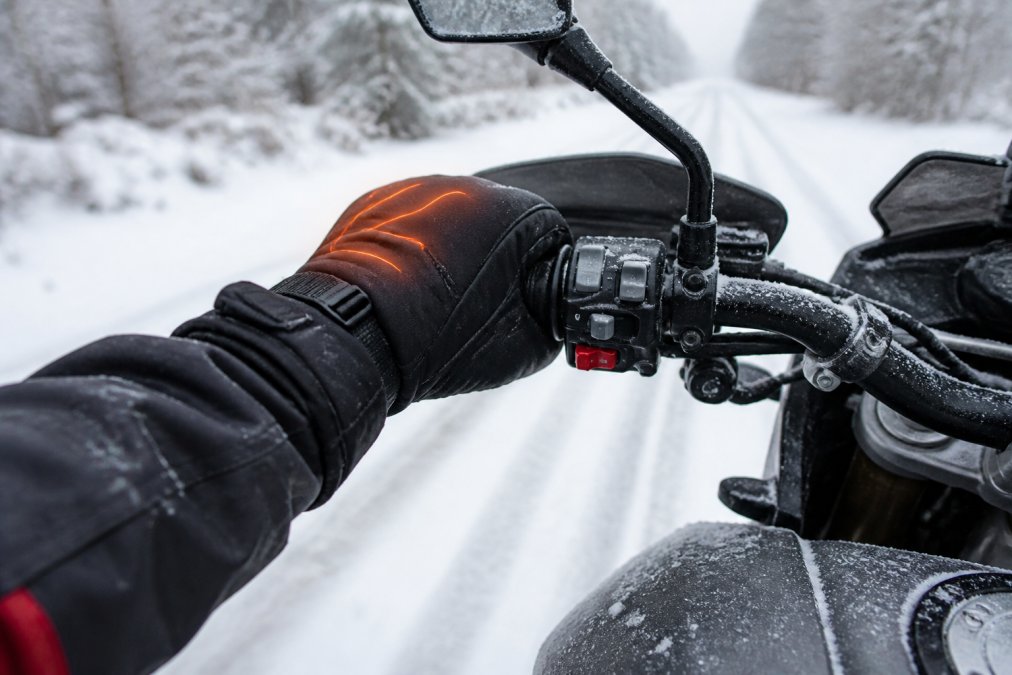
Lithium-ion batteries perform worse in cold conditions. A battery delivering full capacity at 70°F might deliver only 50% capacity at 20°F (peer-reviewed research). Below freezing, degradation accelerates further. This creates a practical problem: on the coldest days when you need maximum warmth, your battery performs at its worst. A 6-hour runtime at moderate temperatures might become 3 hours in extreme cold. The workaround is pre-warming: keep heated gloves plugged in at home before riding or charge them indoors just before heading out.
Battery capacity and milliampere-hour ratings
Battery capacity is measured in milliampere-hours (mAh). A small heated glove battery might be rated at 1,200 mAh, while larger batteries reach 3,500 mAh or higher. A 3,500 mAh battery delivers roughly three times the runtime of a 1,200 mAh battery at the same heat setting. However, real-world runtime also depends on voltage and heating element resistance. Compare actual runtime specifications, not just mAh ratings, since two gloves with similar mAh numbers might have very different real-world performance.
12V vs Battery-Powered Heated Gloves: Runtime Comparison
Hard-wired motorcycle integration
Hard-wired heated gloves connect directly to your motorcycle's 12-volt electrical system. Power flows continuously from the motorcycle's battery and alternator, providing unlimited runtime as long as the motorcycle is running. The tradeoff is installation complexity: you need weatherproof connectors, proper fusing, and careful wiring routing. Hard-wired systems also tie you to the motorcycle, you can't use the gloves on a different bike or during activities off the vehicle. For riders doing extensive winter riding on the same motorcycle, hard-wired systems eliminate battery concerns entirely.
Self-contained battery advantages
Battery-powered heated gloves carry their power supply internally, requiring no installation or motorcycle integration. You can use the same gloves on any motorcycle, in a car, or during hiking. Modern battery-powered gloves often include quick-charge capabilities, reaching 80% capacity in 30-45 minutes. Battery-powered systems also allow modular battery upgrades, if gloves still fit perfectly but the battery is degraded, you can often replace just the battery module rather than buying new gloves. For most riders, battery-powered heated gloves represent the practical balance between convenience and capability.
How to Extend Heated Glove Battery Life
Extending usable life comes down to reducing stress on lithium-ion cells through small habits that compound into significant longevity gains.
Charging cycles and maintenance best practices
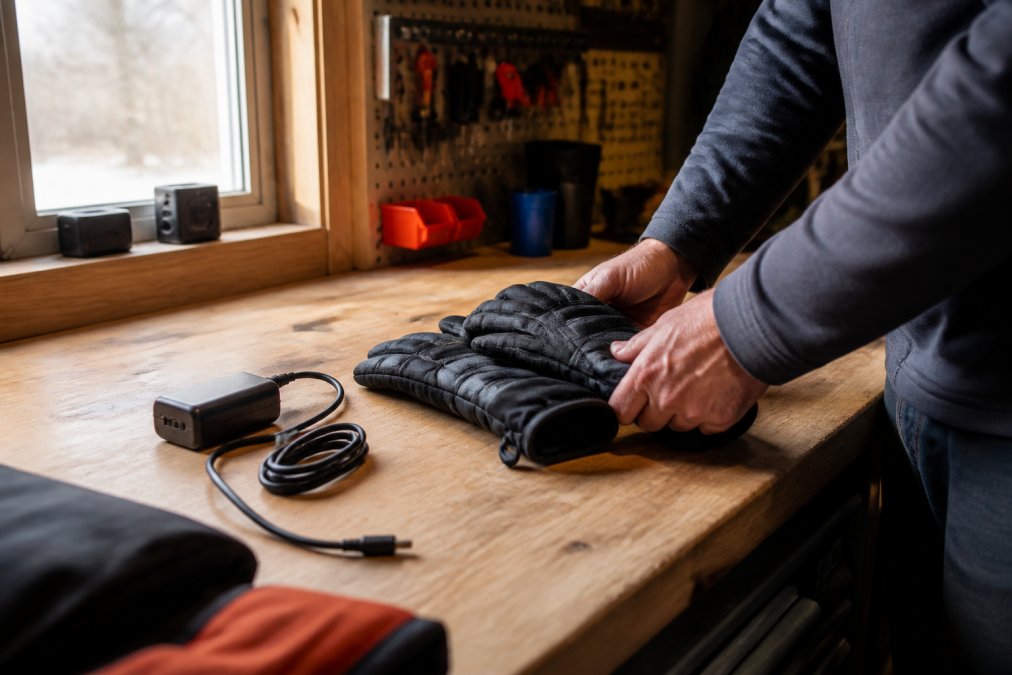
Every full charge-to-discharge cycle degrades a lithium-ion battery slightly. A battery rated for 500 charging cycles will hold roughly 80% of its original capacity after 500 complete cycles. What you can control is how you count those cycles: partial charges count as fractional cycles. Charging gloves from 50% to 100% and using them until 50% again counts as a half cycle, not a full cycle. Charge gloves after every ride, even if not fully depleted. Avoid leaving gloves uncharged for weeks or months. If storing for the off-season, charge to 50% capacity and store in a cool place, topping up every month or two.
Storage and temperature management
The ideal storage temperature is 50-70°F. Avoid storing gloves in vehicles or garages where temperatures exceed 85°F. Store in a dry location to prevent corrosion on connectors and battery terminals. Charge indoors, let gloves cool, then store them, charging generates heat, and storing a warm battery in a hot environment accelerates degradation. A glove sitting in a hot truck bed during summer can lose 10-15% of its capacity in just a few weeks.
Heat setting optimization for longer rides
Start high, finish low: use high heat for the first 15-20 minutes while your hands are coldest, then drop to medium heat. For the final hour, consider low heat if conditions allow. This approach extends total runtime by 40-60% compared to riding on constant high heat. Pay attention to ambient temperature, on mild winter days (40-50°F), medium heat might suffice the entire ride. Save high heat for days below 30°F. Many modern gloves include programmable heat settings or companion apps that let you adjust output without removing gloves.
Heated Motorcycle Gloves Battery Replacement: When and How
Recognizing battery degradation signs
The most obvious sign is reduced runtime. If gloves delivered 6 hours on medium heat when new and now deliver 2-3 hours, degradation is significant. When runtime drops below 2 hours on medium heat, replacement is practical. Other signs include uneven heating (some elements underperform while others work normally), slow charging (taking 3+ hours instead of 90 minutes), or gloves that won't turn on even after charging.
Replacement battery availability and compatibility
The availability of replacement batteries varies dramatically by glove brand and model. Before buying heated gloves, check whether replacement batteries are available for that specific model. Compatibility is critical, a battery from one glove model rarely fits another. Replacement battery modules typically cost 30-50% of the original glove price, often cheaper than buying new gloves. Check the manufacturer's website or contact customer support before your current battery fails.
Troubleshooting Sudden Power Loss and Battery Issues
The most common cause of sudden power loss is a loose or corroded connector. Moisture and salt from winter riding corrode battery terminals. Solution: disconnect the battery, inspect for corrosion (white or green deposits), and clean with a dry cloth. Reconnect firmly. If gloves charge for hours but won't power on, the battery is likely degraded beyond recovery. Solution: order a replacement battery module. Intermittent power loss (gloves work for 30 minutes then shut off) usually indicates a voltage regulation problem. Solution: replace the battery soon. Cold-weather power loss typically means the battery is degraded and cold has reduced its voltage below the operating threshold. Solution: pre-warm gloves indoors before riding or replace the battery. If none of these solutions work, contact the manufacturer's support team with your glove model, purchase date, and problem description.
Heated motorcycle glove batteries represent a balance between performance, convenience, and maintenance. Most riders underestimate how much their own choices, heat settings, charging habits, storage practices, influence battery longevity. A battery lasting 3 years with poor habits can stretch to 5 years with intentional care.
At Precision Upgrades, we provide premium overlanding gear, high-performance LED lighting, and essential outdoor accessories tailored for trucks, SUVs, and motorcycles. Our curated selection is built to withstand the rigors of the trail, ensuring you are fully equipped for your next adventure. Experience fast shipping and reliable quality designed to enhance your vehicle's capability and style. Join our community of outdoor enthusiasts and gear up for the journey ahead. Explore our selection of premium heated gloves and learn which models support battery replacement, ensuring your winter riding gear stays reliable season after season.
Frequently Asked Questions
Q: How long do battery-powered heated gloves last on a single charge?
A: Most lithium-ion heated glove batteries deliver 4-8 hours of runtime on a single charge at moderate heat settings. Runtime varies based on battery capacity (measured in milliampere-hours), the heat setting you select, and ambient temperature. High heat settings drain the battery faster, while lower settings extend runtime significantly. Cold-weather riding reduces effective runtime because lithium-ion chemistry degrades in low temperatures, reducing available voltage and power output.
Q: What factors cause heated glove batteries to drain faster?
A: High heat settings consume the most power; using maximum heat can cut runtime in half compared to medium settings. Cold ambient temperatures degrade battery chemistry, reducing capacity and discharge rate efficiency. Battery age matters too, older lithium-ion packs lose capacity with each charging cycle. Riding in extreme cold also forces the heating elements to work harder to maintain warmth, accelerating drain. Riding duration and glove insulation quality affect power demands as well.
Q: How many years do lithium-ion heated glove batteries typically last?
A: Lithium-ion batteries in heated gloves typically last 2-4 years under normal use, with capacity degradation of 15-20% per year. Battery lifespan depends on the number of charging cycles (most are rated for 300-500 cycles), storage conditions, and how often you ride in extreme cold. Proper maintenance, avoiding complete discharge, storing in moderate temperatures, and not overcharging, can extend lifespan toward the upper range. After 3-4 years, most riders notice noticeably reduced runtime and may consider replacement batteries.
Q: Does the heat setting significantly affect battery runtime?
A: Yes, heat setting has one of the largest impacts on battery runtime. Medium heat settings typically deliver 50-70% longer runtime than high heat, while low settings can extend runtime by 100% or more compared to maximum heat. This is because heating elements draw power proportionally to the heat output; higher settings mean greater power consumption and faster discharge. For extended rides, using medium or low heat with proper insulation underneath often provides better battery longevity than relying on maximum heat throughout the ride.
This article was written using GrandRanker