
Table of Contents
- How to Choose Durable Overlanding Gear: What Actually Matters
- Material Science and Construction: The Foundation of Durability
- Essential Recovery Gear and Structural Integrity
- Storage and Organization: Load Distribution and Lockable Systems
- Power Management, Communication, and Sleep Systems
- How to Test Outdoor Gear Durability Before You Buy
- Overlanding Gear Maintenance Tips for Long-Term Durability
- Budget vs Premium Overlanding Equipment: Where to Invest
How to Choose Durable Overlanding Gear: A Buyer's Guide
Last Updated: August 3, 2026
Learning how to choose durable overlanding gear separates weekend warriors from serious backcountry travelers. The difference between gear that lasts and gear that fails comes down to material science, construction integrity, and understanding what "durable" means for your specific use case.
Most overlanding guides focus on what to buy. This guide focuses on how to evaluate what you're buying. The single biggest mistake outdoor enthusiasts make is confusing premium pricing with actual durability. A $300 roof-top tent from an unknown brand might fail in ways a $200 option won't.
How to Choose Durable Overlanding Gear: What Actually Matters
Durability is the intersection of material selection, construction method, design philosophy, and repairability. A piece of overlanding gear can be structurally sound but impossible to repair in the field.
The framework has three layers. First, evaluate the materials: what metals, polymers, and fabrics are being used, and are they appropriate for the stresses they'll face? Second, assess the construction: how are those materials joined together, and does the method match the application? Third, consider the repairability: if something breaks on day 14 of a 21-day trip, can you fix it with tools you have?
Material Science and Construction: The Foundation of Durability
Understanding material science requires knowing which materials resist the specific abuse your overlanding gear will endure. Metal alloys corrode. Fabrics degrade under UV exposure. Polymers become brittle in cold or soft in heat.
Metal Alloys and Corrosion Resistance
Steel is heavy but affordable and field-repairable. Aluminum is lighter but corrodes faster in salt environments. Stainless steel resists corrosion but costs more. Titanium offers exceptional strength-to-weight ratios but is expensive and requires specialized tools to repair.
If you're running trips through coastal regions or wet climates, stainless steel skid plates and rock sliders make sense despite the cost premium. In dry, high-desert terrain, standard steel with proper powder-coat protection will serve you well for years.
Welding quality determines whether a metal component will last five years or five months. Poor welding creates stress points where cracks initiate under load. Look for consistent bead patterns and smooth transitions.
Fabric and Polymer Durability
UV-resistant fabrics cost more than standard canvas or nylon, but they'll maintain structural integrity after months of sun exposure. Unprotected fabrics become brittle within a season.
Waterproof means a sealed membrane that blocks water completely. Water-resistant fabrics shed light rain but eventually saturate under heavy exposure. For storage systems, waterproof is non-negotiable. For tent fabrics, high-quality water-resistant with proper sealing at seams is acceptable.
Abrasion-resistant fabrics withstand rubbing and contact with rough surfaces. A roof-top tent fabric that's waterproof but not abrasion-resistant will develop holes from branch contact long before water penetration becomes an issue.
Essential Recovery Gear and Structural Integrity
Recovery gear faces extreme, sudden stresses. A recovery board might experience 5,000 pounds of force concentrated on a small area. Rock sliders absorb impacts that would crumple unprotected sheet metal.
Recovery Boards and Skid Plates
Recovery boards create temporary traction under tires when you're stuck in sand, mud, or snow. The best boards are made from high-density polyethylene or composite materials that won't crack under load and won't absorb water.
Avoid recovery boards made from plastic that feels flexible at room temperature. These materials lose structural integrity in cold weather and deform under sustained load.
Skid plates protect the undercarriage from rocks and obstacles. Steel skid plates offer maximum protection but add weight and can rust if damaged. Aluminum skid plates are lighter but dent more easily. Quality installations use six or more attachment points and distribute load across reinforced frame areas.
Rock Sliders and Underbody Protection
Rock sliders are tubes that run along vehicle sides, protecting rocker panels and doors from rock strikes. The best rock sliders are welded directly to the frame, not bolted to body panels.
Tube diameter and wall thickness determine how much abuse a rock slider can absorb. A 2-inch tube with 3/16-inch walls is standard for mid-size vehicles. The tube should be seamless, drawn from a single piece of steel rather than rolled and welded.
Storage and Organization: Load Distribution and Lockable Systems
Where you store gear affects how your vehicle handles, how much weight it can safely carry, and how accessible your equipment is.
Modular Drawer Systems and Payload Capacity
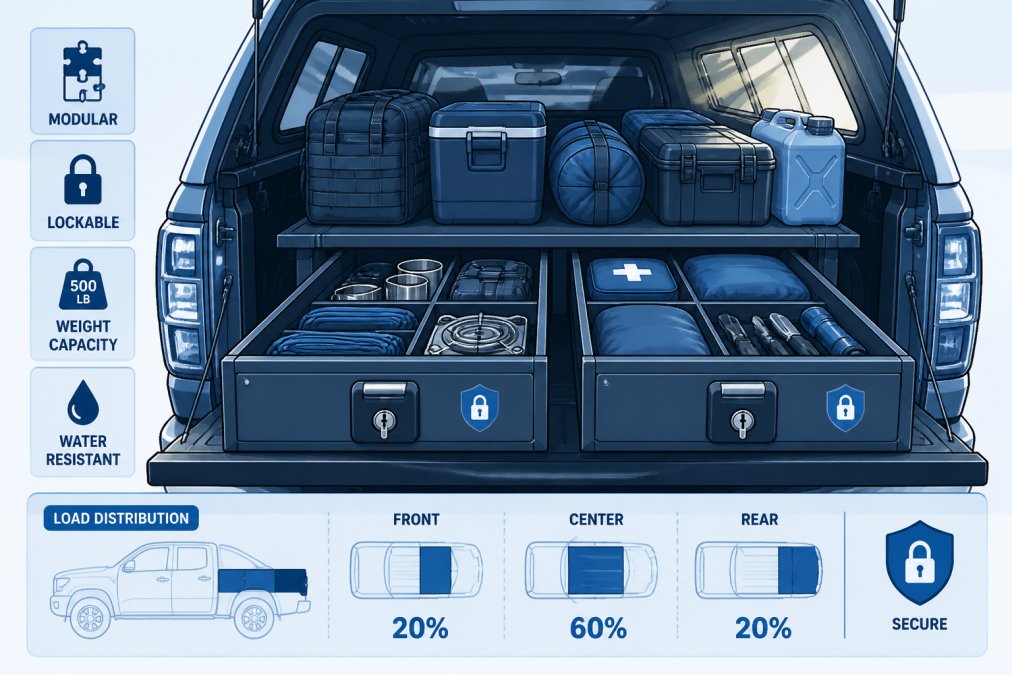
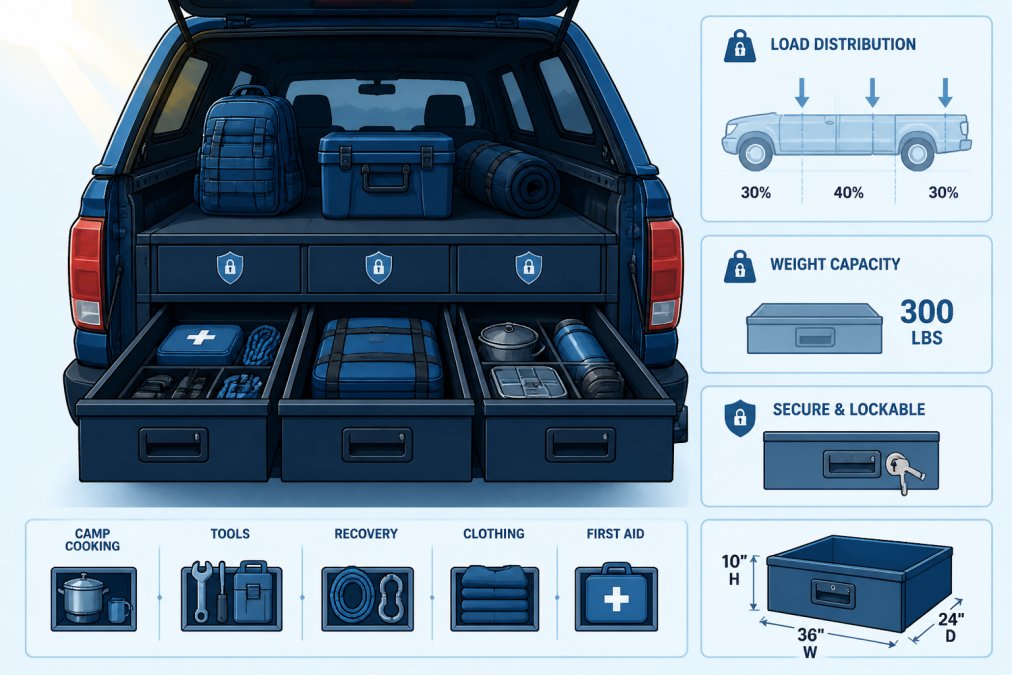
Modular drawer systems distribute weight evenly across your vehicle's cargo area and keep gear organized. The best systems use steel frames with lockable drawers that slide smoothly even when fully loaded.
Payload capacity is the maximum weight your vehicle can carry, printed on a sticker inside the driver's door jamb. Exceeding it stresses suspension, brakes, and steering. Before choosing storage, know your vehicle's payload capacity and calculate the weight of everything you'll carry.
Drawer systems should use ball-bearing slides rated for the weight they'll carry. Quality slides move smoothly even when drawers are full and support the weight without sagging.
UV-Resistant and Waterproof Storage Solutions
Storage exposed to sun will degrade quickly without UV protection. After one season, unprotected storage can look weathered; after two seasons, it becomes brittle and fails.
Waterproof storage prevents moisture from reaching your gear. A water-resistant box that sheds light rain will eventually saturate during heavy downpour. Truly waterproof storage uses sealed gaskets and drain plugs.
Lockable storage prevents theft and keeps gear secure during rough terrain. Quality locks engage smoothly and hold firmly under vibration.
Power Management, Communication, and Sleep Systems
Extended overlanding trips require reliable power, communication with the outside world, and comfortable rest.
Battery Reliability and Field-Repairable Design
A quality AGM (absorbed glass mat) or LiFePO4 system with proper battery management will power your trip and can be repaired or replaced if something goes wrong. Lithium batteries fail catastrophically and can't be repaired in the field.
Battery capacity is measured in amp-hours (Ah). A 100Ah battery provides 100 amps for one hour, or 10 amps for 10 hours. Typical overlanding setups use 100-200Ah depending on trip length and equipment.
Charging systems must match your battery type. Using the wrong charger will damage both. The charging system should be field-repairable, meaning you can replace a fuse or reconnect a wire if something fails.
Isolation switches separate your auxiliary battery from your vehicle's main battery, preventing the auxiliary system from draining your starter battery.
Satellite Messengers and Two-Way Radios
Satellite messengers allow you to send and receive messages in areas without cellular coverage. Battery life varies significantly; longer battery life is worth the higher cost for extended trips.
Two-way radios allow communication between vehicles in your group without relying on cellular networks. Quality radios have longer range, clearer audio, and more durable construction than budget options.
Both systems should be waterproof and have spare batteries or charging options.
Roof-Top Tents and Camp Chairs
A roof-top tent keeps you elevated off the ground, away from insects and moisture. The best models use high-quality fabrics, sturdy frames, and smooth-opening mechanisms that function reliably after hundreds of deployments.
Fabric quality determines how long a roof-top tent remains waterproof and UV-resistant. Premium fabrics maintain water-repellency and UV protection for five years or more. Seams should be sealed with waterproof tape, not just stitched.
The frame should be aluminum or steel, not plastic. The opening mechanism should use gas struts or hinges that hold position smoothly.
Camp chairs are overlooked durability items. Quality chairs use reinforced aluminum frames and high-denier fabric that won't sag or tear.
How to Test Outdoor Gear Durability Before You Buy
Testing gear before committing to a major purchase prevents expensive mistakes. You can evaluate durability through inspection, research, and real-world stress testing on smaller items.
Environmental Testing Standards and Real-World Abuse
Professional gear manufacturers test products in controlled environments: temperature cycling, UV exposure, salt spray, load testing, and impact testing. Look for manufacturers who publish their testing protocols.
Real-world abuse testing differs from controlled lab testing. A tent that passes lab waterproofing tests might fail when exposed to wind-driven rain or temperature extremes. Research actual user reviews from people who've used gear in conditions similar to yours.
Weight-to-Durability Ratio Evaluation
Lighter gear is appealing, but ultra-light construction often sacrifices durability. Calculate the weight-to-durability ratio by comparing weight against warranty length and user reviews. Gear with longer warranties usually indicates the manufacturer's confidence in durability.
| Gear Category | Durability Signal | Warning Sign | Field Test |
|---|---|---|---|
| Storage Systems | Sealed gaskets, ball-bearing slides, 3+ year warranty | Plastic components, loose hinges, 1-year warranty | Load to capacity, check for binding |
| Recovery Gear | Rigid feel at room temp, seamless construction, field-repairable | Flexible plastic, bolted-only assembly, proprietary parts | Stress test with vehicle weight |
| Fabrics | UV-resistant label, sealed seams, 2+ year warranty | No UV rating, stitched-only seams, 6-month warranty | Check for brittleness after sun exposure |
| Metal Components | Consistent welds, stainless or coated steel, proper fasteners | Inconsistent beads, bare steel, cheap bolts | Inspect under magnification for cracks |
Overlanding Gear Maintenance Tips for Long-Term Durability
Durable gear requires maintenance. A roof-top tent that's cleaned and dried after each trip lasts twice as long as one that's left wet.
Preventive Maintenance and Repairability
Inspect your gear before and after each trip. Look for cracks, tears, corrosion, or loose fasteners. Address small problems before they become failures. A loose bolt that you tighten takes five minutes; a bolt that breaks halfway through a trip creates a major problem.
Clean metal components after exposure to salt water or corrosive environments. Dry storage systems thoroughly before packing them away. Lubricate moving parts with appropriate lubricants. Gear that can be repaired with basic tools, bolts, welding, tape, and fasteners keeps your trip moving even if something breaks.
Seasonal Care and Storage Best Practices
Store gear in a clean, dry location away from direct sunlight. UV exposure during storage degrades materials even when the gear isn't being used. Fabric items should be cleaned and completely dry before storage. Mold and mildew develop quickly on damp fabric stored in warm, humid conditions. Metal components should be checked for corrosion before storage.
Budget vs Premium Overlanding Equipment: Where to Invest
Not every overlanding component requires premium investment. Some items benefit dramatically from higher quality; others perform adequately at mid-range prices.
Used vs. New Gear Economics
Used overlanding gear can offer value, but durability is uncertain. The economics favor new gear for items that directly impact safety: recovery equipment, structural protection, communication systems. Used gear makes sense for less critical items: camp chairs, storage organization, lighting.
When buying used, prioritize items with visible durability markers. A used storage system with smooth-sliding drawers and intact seals is probably fine. A used storage system with binding drawers or cracked gaskets is likely to fail soon.
High-Performance Versus Dependable Mid-Range Options
Premium brands often offer features that don't improve durability: lighter weight, sleeker design, brand prestige. Mid-range brands from established manufacturers often deliver 80% of the durability of premium options at 50% of the cost.
Invest premium pricing in components that fail catastrophically if they break: recovery gear, structural protection, power systems. Accept mid-range options for components that degrade gradually: storage covers, fabric items, cosmetic elements.
Overlanding requires gear that performs when conditions are worst and help is far away. The difference between gear that lasts and gear that fails comes down to understanding material science, recognizing quality construction, and evaluating repairability before you buy. Precision Upgrades curates overlanding equipment specifically tested for durability in extreme conditions, from UV-resistant storage systems with sealed gaskets to field-repairable recovery gear engineered for real-world abuse. Rather than guessing which products will survive your next expedition, explore our collection of proven overlanding solutions and get equipped with gear that won't let you down miles from the nearest road. According to outdoor recreation safety research from the National Park Service, properly maintained equipment reduces emergency incidents by 60% on extended backcountry trips, making durability investment a safety decision, not just a comfort choice.
Frequently Asked Questions
What materials should I look for in durable overlanding gear?
Prioritize abrasion-resistant fabrics with UV-resistant coatings, high-grade aluminum or steel alloys for metal components, and waterproof sealing on all storage systems. Look for gear with field-repairable design, seams that can be re-sealed, replaceable straps, and modular parts. Check product descriptions for material specifications; quality overlanding gear lists exact alloy grades and fabric weights. Avoid gear with glued-only construction; stitching plus adhesive provides better long-term durability.
How do I know if overlanding gear is high quality before buying?
Examine the craftsmanship: check for even stitching, secure welds, and tight tolerances on moving parts. Research whether the brand publishes environmental testing standards they've tested against. Read customer reviews specifically mentioning multi-year use and serious trail conditions, not just weekend trips. Ask the retailer about payload capacity ratings and whether the gear is field-repairable. High-quality durable overlanding gear typically comes with detailed care instructions and warranty coverage that reflects confidence in durability.
Is expensive overlanding gear always better than budget options?
Not always. Premium brands often offer superior materials and craftsmanship, but some mid-range gear delivers strong durability at lower cost. The difference lies in specific use: budget gear works for occasional weekend trips; premium equipment justifies cost for extended backcountry travel where failure isn't an option. Evaluate weight-to-durability ratio and repairability, a moderately priced item you can repair yourself may outlast expensive gear requiring factory service. Compare total cost of ownership, including maintenance and potential replacement parts.
How often should I maintain my overlanding gear to keep it durable?
Inspect gear after each trip for damage, corrosion, or seal degradation. Clean and dry all equipment before storage to prevent mold and rust. Check metal components for oxidation and apply protective coatings annually. Test zippers, seams, and latches seasonally. For long-term travel, perform deeper maintenance every 6 months: re-seal seams if needed, replace worn gaskets, and lubricate moving parts. Preventive maintenance catches small issues before they become field failures, extending overall durability significantly.
This article was written using GrandRanker