
Table of Contents
- Why You Need an Overland Addict Alternative
- Best Overlanding Gear Brands Beyond the Standard Options
- Shelter Systems: Rooftop Tents and Awnings
- Budget Overland Gear That Doesn't Sacrifice Quality
- Cargo Storage and Organization Systems
- Essential Overlanding Gear Checklist for Your Build
- DIY vs. Commercial Gear: Cost-Benefit Breakdown
- Conclusion
Last Updated: August 15, 2026
Why You Need an Overland Addict Alternative
Finding the right overland addict alternative matters because the overlanding market has fractured into dozens of brands, each claiming superiority. The gear you choose determines whether your backcountry trip feels effortless or exhausting. A rooftop tent that deploys in 60 seconds changes everything. Storage systems that keep gear organized and protected matter more than you'd think.
The real challenge is finding gear that matches your truck, budget, and actual adventure style. An overlanding setup for weekend trips looks completely different from one built for extended off-grid travel. Your budget constraints should shape what you buy.
Below, we'll walk you through the best overlanding gear brands beyond standard options, dive into shelter systems that deploy fast, and show you how to build a truck ready for serious trails without overspending.
Best Overlanding Gear Brands Beyond the Standard Options
The overlanding market has matured into real alternatives with genuine strengths and honest trade-offs.
Precision Upgrades stands at the top. They curate premium overlanding gear specifically designed for trucks and SUVs, with specialized LED lighting that solves real visibility problems on the trail. The Tuff Stuff Trailhead Pro Roof Top Tent at $1,500 delivers four-season performance with an integrated driving cover that stays attached when deployed or packed. The Tuff Stuff 270 Degree Awning XL wraps nearly three-quarters around your rig, delivering serious shade and weather protection with a rigid, rattle-free C-channel aluminum frame.
Tuff Stuff as a standalone brand deserves mention. The Tuff Stuff Alpine 61 at $4,620 uses aluminum construction with a dual-action opening roof, wedge mode keeps a low profile in wind; full pop-up mode gives 360-degree visibility. The Tuff Stuff Alpha at $3,603 uses ABS construction with a side-opening hybrid design that's lighter, more aerodynamic, and lets you leave bedding inside when packed.
23Zero (sold through Precision Upgrades) brings freestanding awning technology that changes base camp setup. The Onyx 270 Awning delivers 110 square feet of coverage with integrated RGB LED lighting and a 6-arm aluminum box-truss system that deploys solo. The Peregrine PRO 5 270 at $1,095 offers a lighter-weight alternative with freestanding design and light-blocking LST fabric, engineered for vehicles or teardrop trailers.
These aren't better or worse, they're different. Your actual travel style determines which wins.
Shelter Systems: Rooftop Tents and Awnings
Rooftop Tent Alternatives
A rooftop tent keeps you off the ground, away from insects, and elevated above flood risk. Which tent you choose shapes your entire overlanding experience.
The Tuff Stuff Trailhead Pro at $1,500 is the entry point to hardshell tents done right. Four-season fabric handles temperature swings from desert heat to mountain cold. The integrated driving cover stays attached, eliminating fumbling with separate covers. Setup takes under five minutes. Weight is 120 pounds; floor capacity is 800 pounds, handling two people plus gear comfortably.
The Tuff Stuff Alpha at $3,603 uses ABS construction instead of aluminum. ABS is lighter (176 pounds versus 274 pounds for the Alpine) and more aerodynamic, reducing wind noise and fuel consumption. The side-opening design saves setup time on consecutive nights since you leave bedding inside when packed.
The Tuff Stuff Alpine 61 at $4,620 is the capability flagship. Aluminum construction ensures durability. The dual-action opening roof gives wedge mode for windy conditions and full pop-up for maximum headroom. Weight capacity is 1,200 pounds, handling three people plus extended gear loads. The roof rack on top lets you mount kayaks, bikes, or additional cargo directly to the tent structure.
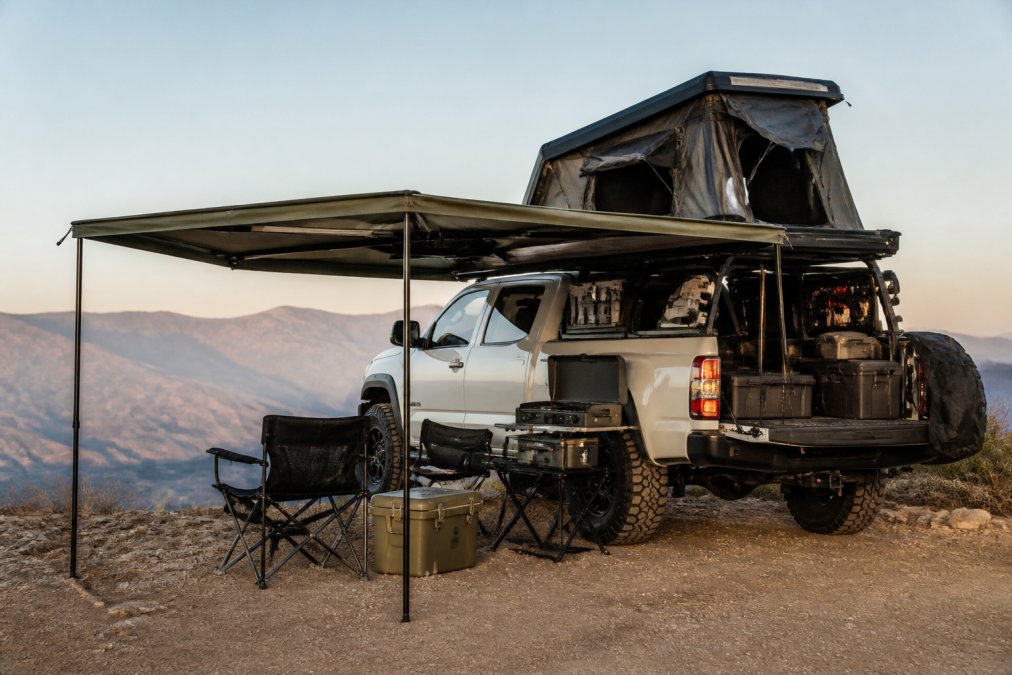
The decision comes down to three variables: budget, vehicle capacity, and travel style. Weekend warriors on a tight budget choose the Trailhead Pro. Overlanders who move camp frequently and care about fuel efficiency choose the Alpha. Expedition teams building rigs for extended off-grid travel choose the Alpine.
Awning Solutions for Base Camp Setup
An awning transforms overlanding from sleeping-bag camping to actual base camp living. The difference between sitting under open sky and sitting under shade while reading matters more than expected after a long day on rough terrain.
The Tuff Stuff 270 Degree Awning XL at $850 is the direct alternative to premium awning brands. Passenger-side mount wraps from rear to front. C-channel aluminum frame is rigid and rattle-free. Olive canvas blends into the backcountry. Heavy-duty zipper closure and integrated hook hardware enable solo setup and teardown.
The Onyx 270 Awning at $995 brings freestanding design, you don't need roof rack attachment. The 6-arm aluminum box-truss system stands on its own. Dual rooftop tent pass-through panels let you access your tent while under the awning. Built-in RGB LED lighting eliminates separate lighting solutions. The 320GSM ECO13B polycotton canvas includes Light Suppression Technology, keeping the shelter cooler by blocking heat and UV.
The Peregrine PRO 5 270 at $1,095 is the lightweight alternative. Freestanding design, waterproof construction, UPF 50 fabric, and light-blocking LST fabric deliver 270-degree coverage. This works best for teardrop trailers or vehicles with a rear hatch or galley door.
Budget-conscious overlanders choose the Tuff Stuff. Teams prioritizing convenience and integrated lighting choose the Onyx. Lightweight-focused overlanders choose the Peregrine.
Budget Overland Gear That Doesn't Sacrifice Quality
Budget-friendly overlanding gear means making smarter choices about what matters, not compromising durability or functionality.
Start with cargo storage. The 70L Overland Gear Box at $245 and 50L Overland Gear Box at $245 deliver genuine value. Both use durable LDPE construction with dust and waterproof seals. Gas struts mean you're not fighting to open them. Lockable latches keep gear secure on rough terrain. Drain plugs let you empty water if you ford streams.
The ICECO APL55 Aluminum Dual Zone 58QT Portable Cooler at $959 represents a cooler choice. Aluminum construction resists wear and improves cooling efficiency. Dual-zone operation lets you run one side as fridge and the other as freezer, or both as fridge for maximum capacity.
| Gear Type | Budget Option | Price | Best For |
|---|---|---|---|
| Rooftop Tent | Tuff Stuff Trailhead Pro | $1,500 | Weekend trips, smaller trucks |
| Awning | Tuff Stuff 270 XL | $850 | Direct vehicle mounting, solo setup |
| Storage (Large) | 70L Gear Box | $245 | Bulky gear, recovery equipment |
| Storage (Medium) | 50L Gear Box | $245 | Smaller rigs, weight-conscious builds |
| Cooler | ICECO APL55 | $959 | Extended trips, dual-zone cooling |
Cargo Storage and Organization Systems
Overlanding without proper cargo organization fails. Your gear gets damaged. Recovery equipment ends up buried. Spare parts get lost. Setup takes twice as long.
The modular storage approach works because it matches how overlanding actually happens. You're packing and unpacking every day or every few days. Gear needs to be accessible, protected, and organized.
The 70L Overland Gear Box at $245 handles big items: recovery gear, spare parts, tools, heavy-duty tarps. Outside dimensions are 27.25 inches by 17.5 inches by 13.5 inches. Weight is 21 pounds.
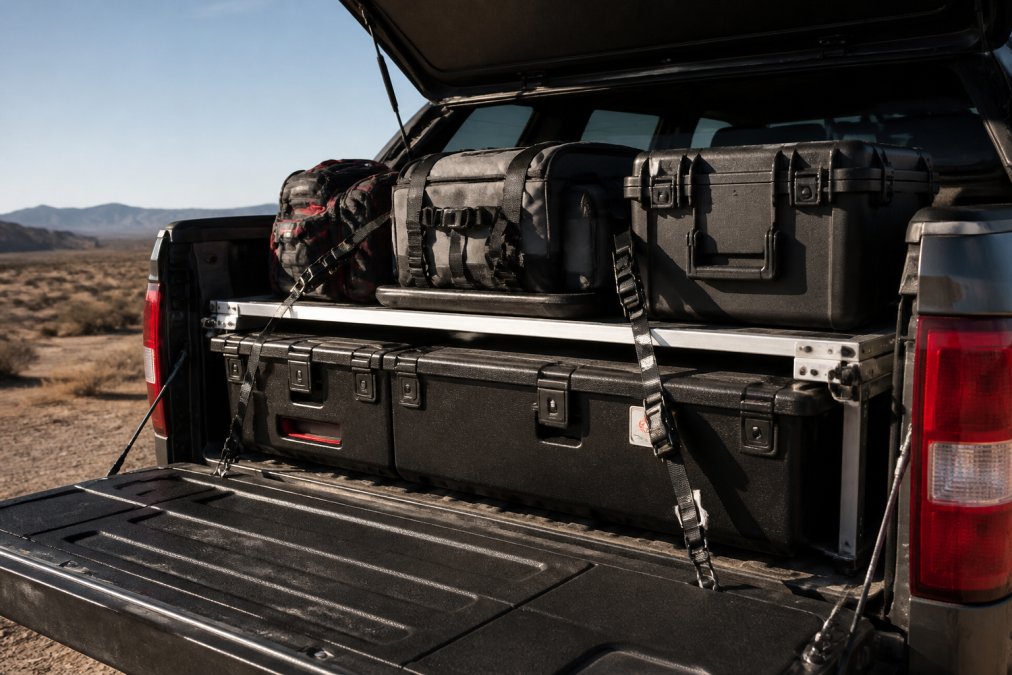
The 50L Overland Gear Box at $245 handles medium items: camp kitchen gear, lighting, first aid, electronics. Weight is 17 pounds.
You stack boxes in your truck bed, secure them with tie-down straps, and everything stays organized while driving rough terrain. No shifting. No damage. No hunting through piles of gear at camp. Weight distribution matters more than most overlanders realize. Multiple smaller boxes distributed across the bed solve handling and tire wear issues. Stackability maximizes truck bed space.
Essential Overlanding Gear Checklist for Your Build
Building an overlanding rig requires understanding what matters for your specific adventure style. A weekend warrior needs a different checklist than a three-week expedition team.
Start with non-negotiables: shelter (rooftop tent or ground tent), storage (cargo boxes), recovery gear (traction boards, winch if supported), navigation (offline maps, GPS device), first aid (comprehensive kit for remote areas), water (containers and filtration), and food (cooler and camp kitchen basics).
From there, your checklist depends on actual needs. Solo weekend trips require less redundancy than team expeditions. Desert overlanding requires different gear than mountain overlanding. Start minimal. Add gear based on actual experience, not hypothetical scenarios.
Essential overlanding gear includes:
- Rooftop tent or quality ground tent
- Cargo storage boxes (modular, stackable)
- Awning for base camp setup
- Recovery equipment (traction boards, shackles, recovery strap)
- Navigation tools (offline maps, compass, GPS)
- Water containers and filtration system
- Camp kitchen basics (stove, cookware, utensils)
- First aid kit rated for remote areas
- Lighting (headlamps, camp lantern, vehicle lights)
- Spare parts and tools specific to your vehicle
- Communication device (satellite messenger for extended trips)
- Bedding (sleeping bag, sleeping pad, pillow)
- Clothing appropriate for season and elevation
- Hygiene and sanitation supplies
DIY vs. Commercial Gear: Cost-Benefit Breakdown
DIY gear costs less upfront but requires skills, time, and often ends up costing more when factoring in failures.
Commercial rooftop tents cost $1,500 to $4,600. DIY rooftop tents cost $500 to $1,200 in materials. That's real savings until your DIY tent leaks during a rainstorm or welding fails on a bumpy road. A DIY rooftop tent that fails halfway through a three-week trip costs you the entire trip plus emergency hotel costs. A commercial tent engineered by professionals with a warranty costs more upfront but eliminates that risk.
Commercial awnings cost $850 to $1,095. DIY awnings using PVC pipe and canvas cost $300 to $500. Until the PVC joints fail under wind load or canvas tears, or you realize setup takes 45 minutes instead of 10 minutes.
Where DIY wins: small accessories. A DIY camp kitchen using a portable stove and plywood frame costs $200 and works well. Commercial camp kitchens cost $800 to $1,500. For camp kitchens, DIY makes sense because design is simple and failure isn't catastrophic.
DIY the small stuff where failure is inconvenient but not dangerous. Buy commercial for the big stuff where failure could ruin your trip or hurt someone.
| Gear Category | DIY Cost | Commercial Cost | Recommendation |
|---|---|---|---|
| Rooftop Tent | $500-$1,200 | $1,500-$4,600 | Buy commercial |
| Awning | $300-$500 | $850-$1,095 | Buy commercial |
| Storage Boxes | $150-$400 | $245 | Buy commercial |
| Camp Kitchen | $200-$400 | $800-$1,500 | DIY acceptable |
| Recovery Gear | $300-$600 | $400-$800 | Buy commercial |
| Lighting | $100-$300 | $200-$500 | DIY acceptable |
Building an overlanding rig that actually works requires honest decisions about what you need, what you can afford, and what's worth buying versus building. Precision Upgrades solves this by curating gear specifically designed for vehicle-based adventure travel. The Tuff Stuff Trailhead Pro at $1,500 deploys in five minutes and handles four seasons. The Tuff Stuff 270 Awning XL at $850 delivers serious shade. The modular storage boxes at $245 each keep your gear organized and protected. Start with these essentials, add based on actual experience, and you'll build a rig ready for serious trails. Shop Now and get 15% off your first order with newsletter signup.
Frequently Asked Questions
What are the best alternatives to Overland Addict for truck gear?
Several brands offer quality overlanding gear comparable to or better than Overland Addict. Precision Upgrades carries Tuff Stuff rooftop tents and awnings, along with 23Zero storage solutions and Iceberg Outdoor Group products. These alternatives range from budget-friendly options like the Tuff Stuff Trailhead Pro ($1,500) to premium systems like the Alpine 61 ($4,620). Each brand specializes in different aspects: Tuff Stuff excels in shelter systems, 23Zero in modular storage, and Iceberg in cooling solutions. Your choice depends on which gear category matters most for your build and your budget constraints.
Is overlanding gear worth the high price tag?
Quality overlanding gear justifies its cost through durability, reliability, and performance on extended backcountry trips. Premium rooftop tents with 4-season ratings handle temperature swings and weather that budget alternatives cannot. Storage solutions with waterproof seals protect expensive recovery equipment and supplies over months-long journeys. The real value emerges when gear performs under stress, a failed awning or compromised shelter on a three-week trip costs far more than the initial investment. Budget gear exists, but premium options offer warranties, better materials, and proven field performance that reduce replacement costs over time.
What are the most essential gear upgrades for a beginner overlander?
Start with shelter and storage: a rooftop tent or ground tent system, an awning for camp comfort, and weatherproof gear boxes for organization. Add recovery equipment (traction boards, winch-compatible recovery points), navigation tools (offline maps, GPS), and lighting for night setup and safety. A portable cooler keeps food and water fresh on extended trips. These core categories address the overlanding gear checklist priorities: sleeping comfort, camp functionality, cargo management, and trail readiness. Beginners often overspend on accessories before securing reliable shelter and storage, prioritize those first, then add specialized tools as your trips become more ambitious.
How do I know if overlanding gear will fit my specific truck model?
Check crossbar dimensions first, most rooftop tents fit crossbars up to 2.75" to 3.25" wide. Verify your truck's roof load capacity against the tent's weight (typically 120-274 lbs) and total payload. Awnings mount to roof racks or side rails; confirm your vehicle has compatible attachment points. Storage boxes are generally universal, but measure your truck bed length to ensure boxes don't interfere with tailgate operation. Contact the manufacturer with your truck's year, make, and model, they can confirm compatibility and recommend mounting hardware. Precision Upgrades staff can verify fit before you purchase.
What's the difference between hardshell and soft-shell rooftop tents?
Hardshell tents (aluminum or ABS construction) offer faster setup, better insulation, and year-round durability. They handle wind better and provide secure storage when closed. Soft-shell tents are lighter, more affordable, and pack smaller but require longer setup time and offer less weather protection in extreme conditions. Hardshells like the Tuff Stuff Alpine 61 deploy in under 60 seconds and maintain interior temperature in 4-season use. Soft-shell options suit weekend warriors on tight budgets; hardshells suit serious overlanders planning extended trips or winter camping. Your choice depends on trip frequency, climate, and weight capacity of your vehicle.
This article was written using GrandRanker