
Table of Contents
- Why Overlanders Need Multiple Storage Options
- Hard-Shell Storage Cases for Maximum Protection
- Best Modular Truck Bed Rack Systems
- L-Track Systems and Tie-Down Solutions
- Truck Bed Storage Organization Ideas
- Overland Bed Rack Weight Capacity Comparison
- DIY vs. Modular: Cost-Benefit Analysis
- Choosing the Right Storage Solution for Your Rig
Last Updated: August 16, 2026
Why Overlanders Need Multiple Storage Options
Overlanding demands more than just throwing gear in the truck bed. You need systems that secure your equipment, protect it from the elements, and organize it efficiently so you can access what matters when you need it. Whether you're heading out for a weekend trip or a three-week expedition into remote terrain, the wrong storage setup turns a smooth adventure into frustration.
The challenge isn't just capacity, it's reliability. Your cargo needs to stay put through washboard roads, river crossings, and rocky terrain. Hard-shell cases, modular rack systems, L-track tie-downs, and DIY alternatives each serve different priorities: security, weight distribution, accessibility, and cost.
This guide breaks down the leading overland storage alternatives for storage, comparing their strengths and trade-offs so you can choose what actually matches your rig and your adventures. We'll examine hard-shell protection, modular systems, tie-down solutions, and the economics of building versus buying.
Hard-Shell Storage Cases for Maximum Protection
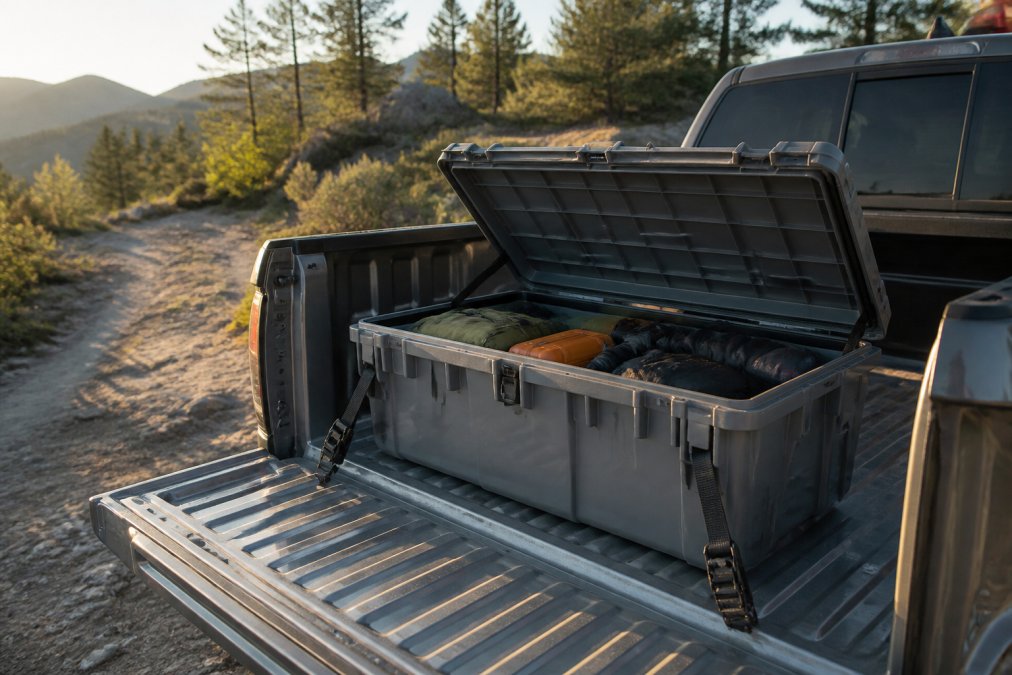
Hard-shell storage cases are the gold standard for gear that can't get wet or damaged. These rigid, lockable boxes mount to your truck bed and offer weatherproofing that soft cases simply can't match. They're particularly valuable if you're carrying electronics, documentation, recovery equipment, or anything irreplaceable.
The Precision Upgrades 70L Overland Gear Box ($245.00) and 50L Overland Gear Box ($245.00) represent the practical middle ground in this category. Both feature durable LDPE construction with dust and waterproof seals, gas struts that hold lids open, sturdy handles for easy loading, and lockable latches for security. The 70L model offers 27.25" L x 17.5" W x 13.5" H external dimensions with 21.75" L x 12" W x 12" H interior space, weighing 21 lbs when empty. The 50L version provides 24.5" L x 15" W x 14" H external dimensions with 19.25" L x 9.25" W x 12" H interior space at 17 lbs.
Both boxes include drain plugs for water management, tie-down holes under the lid for secure mounting, and rivnuts already mounted for straightforward installation. The stackable design means you can run multiple cases if your expedition demands it, a practical advantage for longer trips where you need compartmentalized storage for different gear types.
Hard-shell cases excel at protecting sensitive equipment but come with trade-offs. They're heavier than soft alternatives, which impacts your vehicle's payload capacity. They also create a fixed storage footprint, once mounted, you're committed to that footprint. If you need flexibility to adjust your setup between trips, modular systems offer more adaptability.
Best Modular Truck Bed Rack Systems
Modular truck bed rack systems give you the flexibility to customize your storage layout and add or remove components as your needs change. These aluminum extrusion-based platforms use crossbars, uprights, and mounting points to create a framework where you can attach cases, recovery gear, or additional accessories.
The strength of a modular system lies in scalability. Start with a basic crossbar setup and add uprights, side rails, or specialized mounts as your adventures demand more capability. Unlike fixed hard cases, you're building a platform that grows with your overlanding ambitions.
Modular systems typically use aluminum extrusion for weight efficiency and durability. The crossbars and uprights are designed to handle vibration from rough terrain without loosening or degrading over extended use. Most systems accommodate standard tie-down points, making them compatible with L-track systems and recovery gear mounting options.
Installation varies by system but generally involves bolting the frame to your truck bed using existing mounting holes or drilling new ones. The modular approach means you can reconfigure the layout between trips, moving recovery gear to different positions, adding or removing crossbars, or swapping out specialized mounts.
The trade-off is complexity. A modular system requires more planning than a simple hard case. You need to think through weight distribution, balance, and how different components interact. For experienced overlanders, this flexibility is worth the extra consideration. For casual users, a dedicated hard-shell case may be simpler.
L-Track Systems and Tie-Down Solutions
L-track systems provide a permanent mounting infrastructure in your truck bed that accepts many tie-down hardware, creating a flexible anchor point for any cargo. Rather than bolting specific gear to specific locations, you install aluminum L-tracks along the bed and use compatible fittings, straps, and brackets to secure whatever you're carrying.
The Precision Upgrades DCI Rollercam L Track Surface Mount 2-Pack ($50.00) includes two 4-foot aluminum 6061-T6 tracks with pre-drilled mounting holes every 4 inches. This aluminum extrusion provides the structural backbone. The pre-drilled spacing allows you to position fittings exactly where you need them without additional modification.
Tie-down straps with the patented Rollercam buckle system offer superior holding power compared to standard cam buckles. The Rollercam design uses a roller mechanism that grips the webbing more effectively, reducing slippage under vibration and load shift. The DCI Rollercam Strap options range from 1.00" width with 350 lbs working load to 1.25" width with 500 lbs working load, available in multiple lengths.
The DCI Rollercam L Track Kits ($33-$36 depending on length) bundle tracks with compatible straps, giving you a complete system. The 6-foot kit includes four strap pieces with two different end configurations, some with cam buckles, others with straight ends, allowing you to customize how you secure gear.
L-track systems shine when you're carrying varied cargo types or changing what you transport between trips. Recovery boards, jerry cans, tools, and expedition gear can all attach to the same track infrastructure using appropriate fittings. The flexibility means you're not locked into a single storage configuration.
The complexity trade-off applies here too. Installing L-tracks requires drilling into your truck bed and understanding load distribution. Once installed, they're permanent modifications. However, the versatility justifies the commitment for serious overlanders who run multiple trip types.
| Tie-Down Option | Working Load | Best For | Price Range |
|---|---|---|---|
| 1.00" Loop End Strap | 350 lbs | Standard cargo, recovery gear | $9.00-$10.00 |
| 1.25" Straight Strap | 500 lbs | Heavy equipment, larger loads | $10.50+ |
| L-Track Surface Mount | Varies | Permanent bed infrastructure | $50.00 |
| L-Track Kit (6-9') | Varies | Complete tie-down system | $33.00-$36.00 |
Truck Bed Storage Organization Ideas
Organization separates functional overlanding from chaotic gear piles. A well-organized truck bed means you can find what you need without unloading everything, and you understand your weight distribution at a glance.
Start by categorizing your gear: recovery equipment, camp setup, tools, water, food, and personal items. Each category should have a dedicated storage location. Recovery gear typically goes low and centered for weight balance. Camp equipment can be higher and toward the rear. Tools and consumables work well in hard-shell cases where they stay protected and organized.
Use vertical space efficiently. Crossbars and uprights create natural shelving. Smaller hard cases stack on larger ones. Soft bags compress into corners. The goal is maximizing cubic footage while keeping weight balanced side-to-side and front-to-back.
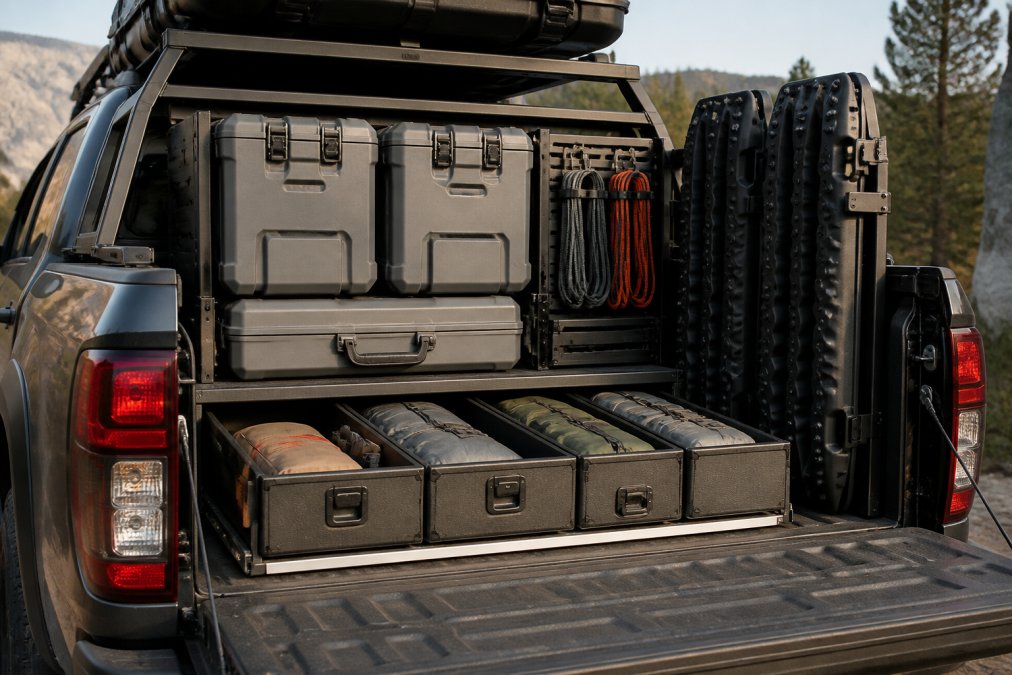
Labeling matters more than people expect. Mark your cases with their contents using durable labels or paint markers. When you're setting up camp in fading light or troubleshooting a mechanical issue, knowing exactly where your tools are saves real time and frustration.
Consider accessibility patterns. Gear you use daily should be accessible without moving other items. Recovery equipment should be immediately available if you get stuck. Camp setup can be less accessible since you'll unload it once per day. This hierarchy determines your physical layout.
Weight distribution is critical. Your truck's payload capacity is fixed. Distribute weight evenly side-to-side and keep heavy items low and centered. An unbalanced truck handles poorly and stresses suspension components. Most experienced overlanders aim to keep weight in the bottom third of the bed height.
Overland Bed Rack Weight Capacity Comparison
Weight capacity determines what you can actually carry. Your truck has a manufacturer-specified payload capacity, the maximum weight you can add to the bed. Exceeding this capacity stresses suspension, brakes, and frame components, compromising safety and durability.
Most truck bed racks are rated for specific working loads based on their construction material and mounting method. Aluminum extrusion systems typically handle 500-1,500 lbs depending on the specific design and installation. Hard-shell cases add their own weight to your total, which must be factored into your payload equation.
The calculation is straightforward: truck payload capacity minus rack system weight minus case weight equals the cargo weight you can carry. A truck with a 1,500 lbs payload, a 200 lb rack system, and a 40 lb hard case leaves 1,260 lbs for actual gear.
This is where weight-to-payload ratio analysis becomes practical. A modular system that weighs 200 lbs but offers 1,500 lbs working load capacity is more efficient than one weighing 300 lbs with the same capacity. You're trading less vehicle capacity for more carrying capability.
Consider your typical load. Weekend trips might use 300-500 lbs of gear. Month-long expeditions could push 1,000+ lbs. Match your storage solution's capacity to your actual needs rather than specifying the heaviest-duty option available. Oversizing wastes payload capacity and adds unnecessary weight.
DIY vs. Modular: Cost-Benefit Analysis
Building your own truck bed storage system versus buying pre-manufactured solutions involves real trade-offs in cost, time, customization, and reliability.
DIY approaches typically cost less upfront. Basic aluminum extrusion, bolts, and welding supplies can build a functional rack system for $200-$400. Hard cases or storage boxes from industrial suppliers sometimes cost less than overlanding-specific versions. The appeal is obvious: significant savings.
The hidden costs emerge quickly. DIY projects require tools you may not own: angle grinders, drill presses, welding equipment, or access to machine shops. Your time investment is substantial, designing the system, sourcing materials, fabricating components, and testing under load. A weekend project often stretches into multiple weekends.
Quality and durability suffer without engineering expertise. A DIY system might work fine for light use but fail under vibration and stress from serious off-road travel. Welds can crack. Bolts can loosen. Mounting points can tear through truck bed material. When your DIY rack fails 200 miles from civilization, the cost of that failure far exceeds the money you saved building it yourself.
Modular systems from established manufacturers carry higher upfront costs but include engineering validation, quality control, and warranty support. The 70L Overland Gear Box at $245 includes tested weatherproofing and proven mounting hardware. You're paying for reliability.
The practical calculation: DIY makes sense if you have fabrication skills, access to tools, and you're building for low-stress applications like weekend trips. Modular systems make sense if you're serious about overlanding, run challenging terrain regularly, or value reliability over cost savings.
| Approach | Upfront Cost | Time Investment | Customization | Reliability | Best For |
|---|---|---|---|---|---|
| DIY Build | $200-$400 | 20-40 hours | High | Medium | Casual users, experienced fabricators |
| Modular System | $400-$1,200 | 2-4 hours | Medium | High | Serious overlanders, frequent trips |
| Hard-Shell Cases | $200-$500 | 1-2 hours | Low | High | Protection-focused users |
| L-Track System | $300-$600 | 4-6 hours | High | High | Versatile, multi-purpose adventurers |
Choosing the Right Storage Solution for Your Rig
The best overland storage alternatives for storage depends on three factors: your vehicle's payload capacity, your trip duration and terrain, and your budget.
Start with payload. If your truck has a 1,200 lbs payload, you can't load 1,500 lbs of storage system and gear. This constraint is non-negotiable. Calculate your available capacity, then work backward to determine what storage solutions fit.
Trip duration shapes your choice. Weekend trips need basic organization and weather protection. Month-long expeditions demand redundancy, compartmentalization, and recovery gear accessibility. A casual user might be satisfied with two hard-shell cases. An expedition planner needs modular flexibility.
Terrain matters too. Smooth highway travel is forgiving of loose cargo. Washboard roads and rocky terrain demand secure tie-down systems that prevent shifting. Recovery situations require immediate access to specific gear, which influences organization strategy.
Budget reality: you can build a functional overlanding storage system for under $500 with hard cases and basic L-track. Comprehensive modular systems run $1,000-$2,000. DIY projects fall somewhere in between depending on your tool access and labor availability.
Start simple. Many overlanders begin with a single hard-shell case and basic tie-downs, then expand as they understand their actual needs. This approach lets you learn what works for your specific adventures before investing heavily in a complete system.
Frequently Asked Questions
What are the best modular truck bed rack systems for overlanding?
Modular systems offer flexibility and scalability for overlanding adventures. Look for aluminum extrusion racks with adjustable crossbars, uprights that accept accessories, and compatible tie-down points. L-track systems with Rollercam straps provide secure load distribution and allow you to customize your setup as your gear needs evolve. The DCI Rollercam L Track Kit ($33-$36) pairs with surface mounts and heavy-duty straps to create a trail-ready platform system that handles recovery gear, soft toppers, and expedition equipment.
How do I know what weight capacity my overland bed rack can handle?
Check the manufacturer's specifications for payload capacity and working load limits on individual components. Aluminum 6061-T6 tracks like the DCI Rollercam surface mount are lightweight yet strong, but capacity depends on mounting method and fastener quality. For tie-down straps, the 1.25" Expedition strap supports 500 lbs working load, while 1.0" straps handle 350 lbs. Always verify your truck's payload capacity first, then match your rack system to that limit, accounting for gear weight distribution across multiple tie-down points.
Are hard-shell storage cases better than modular racks for overlanding?
Each serves different needs. Hard-shell cases like the 70L Overland Gear Box ($245) excel at protecting sensitive gear from dust, water, and impact, ideal for electronics, documents, and valuables. They're weatherproof and stackable. Modular racks prioritize accessibility and flexibility, letting you mount recovery equipment, soft toppers, and custom accessories. Many overlanders use both: hard-shell cases for secure storage inside or on the rack, plus L-track systems for lashing down larger items. Choose based on what gear you're protecting and how often you need to access it.
Can I integrate a tonneau cover with an overland bed rack system?
Yes, but compatibility depends on your rack design. Modular L-track systems and low-profile aluminum extrusion racks work well with tonneau covers because they don't obstruct the cover's operation. Hard-shell cases can sit under a tonneau if space allows. Before purchasing, verify that your chosen rack height and mounting points don't interfere with cover installation or functionality. Some overlanders mount racks on top of tonneau covers for additional cargo capacity, though this affects payload distribution and aerodynamics.
Overlanding storage isn't one-size-fits-all, but the principles are consistent: secure your gear, protect what matters, balance your weight, and organize for accessibility. Precision Upgrades offers proven solutions like hard-shell storage boxes and L-track tie-down systems that handle serious terrain. Explore our modular options, test your setup on weekend trips, and refine your system as your adventures demand more capability. Shop Now to gear up for your next expedition.
This article was written using GrandRanker