
Table of Contents
- Why the 2026 4Runner Changes Everything for Overlanding
- Essential Recovery Gear and Off-Road Recovery Essentials
- Rooftop Tents and Sleeping Systems for Multi-Day Expeditions
- Overland Lighting Solutions for SUVs and Trail Visibility
- Suspension, Armor, and Drivetrain Protection
- Weight Management and Payload Capacity on the 6th Gen Platform
- Best Portable Campfire Pit for Overlanding Basecamp Setup
- Budget-Tier vs. Premium Build Paths: Where to Invest
Last Updated: August 26, 2026
Why the 2026 4Runner Changes Everything for Overlanding
The 2026 Toyota 4Runner arrives with a completely redesigned platform that fundamentally shifts how you approach overlanding gear selection. The sixth-generation model sits on Toyota's TNGA-F platform, which prioritizes lighter weight distribution and modular mounting points. This matters because overlanders typically add 500-1,200 pounds of gear, and not all older aftermarket accessories bolt on cleanly, some require custom brackets or create weight imbalances that compromise off-road handling.
The good news: the 2026 redesign opens new possibilities. The frame geometry allows better suspension lift integration, the electrical system now supports higher-amperage auxiliary loads for dual battery systems and winch setups, and the roof structure has been reinforced specifically for rooftop tents and awning systems. This guide walks you through essential overlanding gear for 2026 4Runner builds, breaking down what works, where weight management becomes critical, and how to prioritize your budget across recovery, sleeping, lighting, and protection systems.
Essential Recovery Gear and Off-Road Recovery Essentials
Recovery equipment is non-negotiable for serious overlanding. The 2026 4Runner's frame design includes reinforced recovery points rated for 9,000-pound winch loads, a significant upgrade that enables safer extraction scenarios (toyota.com).
Start with a quality kinetic recovery rope rated for your vehicle's weight. A 7/8-inch diameter rope with 23,000-pound breaking strength handles most 4Runner scenarios. Pair this with heavy-duty shackles, a snatch block for mechanical advantage, and recovery boards for traction in mud or sand.
Rock sliders protect your frame and suspension during side-impact scenarios, bolting to frame rails and extending 3-4 inches outward. Skid plates protect your undercarriage, engine sump, transmission pan, transfer case, and fuel tank all need coverage. A complete skid plate system adds 80-120 pounds but prevents catastrophic damage in rocky terrain.
A winch adds 150-180 pounds to your front end, affecting suspension geometry. Counterbalance this by positioning auxiliary battery systems toward the rear. A portable air compressor rated for 150 PSI completes your recovery arsenal.
| Recovery Gear Item | Purpose | Weight Impact | Installation Complexity |
|---|---|---|---|
| Kinetic recovery rope (7/8") | Energy-absorbing extraction | 12 lbs | Minimal |
| Rock sliders | Frame/suspension protection | 100 lbs | Moderate |
| Skid plates (complete set) | Undercarriage protection | 90 lbs | Moderate |
| Electric winch (9,500 lbs) | Vehicle extraction | 160 lbs | High |
| Portable air compressor | Tire pressure management | 25 lbs | Minimal |
Rooftop Tents and Sleeping Systems for Multi-Day Expeditions
A hardshell rooftop tent transforms your 2026 4Runner into a mobile basecamp. The new platform's reinforced roof structure supports rooftop tents rated for 300-400 pounds, including occupants and bedding (toyota.com). Deployment speed matters, you want setup in under two minutes.
The Tuff Stuff Alpine 61 hardshell rooftop tent ($4,620) represents the premium end. Its aluminum construction weighs 180 pounds with dual-action hinges and integrated mattress. Four-season insulation means winter expeditions become viable. For budget-conscious builds, the Tuff Stuff Trailhead Pro ($1,500) delivers 80% of the performance at 40% of the cost, with ABS hardshell construction weighing 95 pounds and setup under five minutes.
The Tuff Stuff Alpha hardshell rooftop tent ($3,603) hits the sweet spot between weight and durability, with sloped aerodynamic design reducing wind noise on highways.
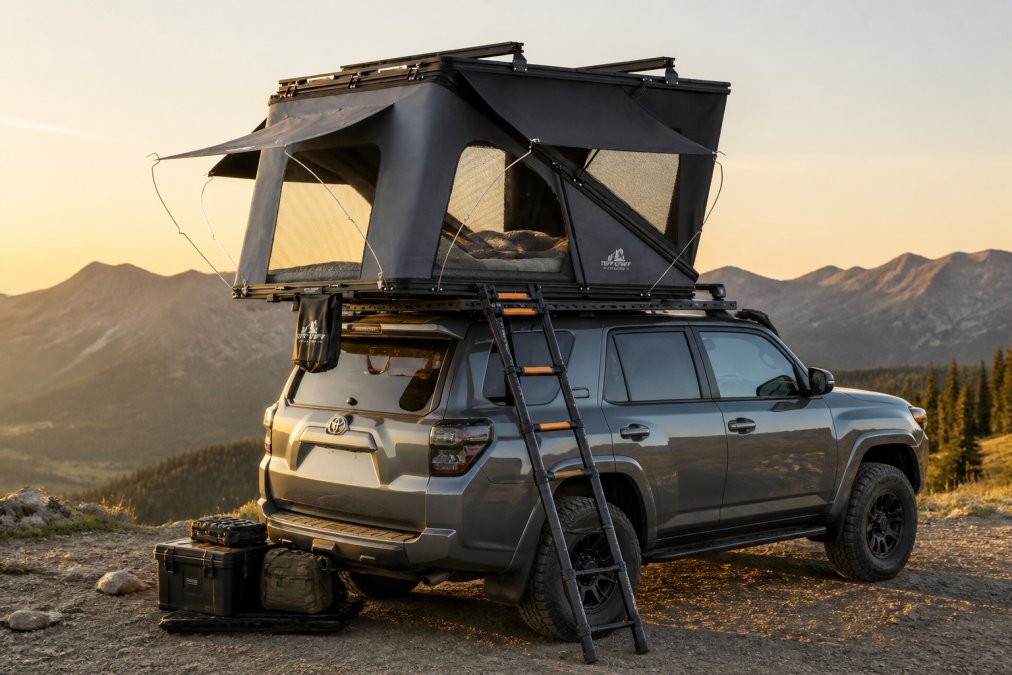
Hardshell tents require quality foam mattresses (4-6 inches thick) to prevent heat loss. Synthetic insulation outperforms down in damp conditions. Pair your tent with a sleeping bag rated 10-15 degrees below your expected minimum temperature.
Overland Lighting Solutions for SUVs and Trail Visibility
Auxiliary lighting transforms your overlanding capability after sunset. Stock headlights lack the throw distance and flood coverage needed for technical trail navigation. A quality light bar mounted above the windshield extends visibility 200+ feet ahead.
LED technology dominates modern overlanding lighting because it generates minimal heat, draws less electrical current, and produces 3,000+ lumen output. A 52-inch curved LED light bar draws 80-120 amps at full brightness, manageable with auxiliary battery systems but impossible with stock electrical.
Fog light upgrades matter significantly. Stock fog lights illuminate 20-30 feet ahead. Aftermarket LED fog lights rated for 2,000+ lumens extend that to 80+ feet. Mount these low on the bumper to eliminate glare. A combination approach works best: main light bar for distance, roof-mounted spotlights for side terrain, bumper-mounted fog lights for immediate ground coverage. This three-tier system costs $800-1,500.
Suspension, Armor, and Drivetrain Protection
The 2026 4Runner's suspension geometry differs significantly from previous generations. A 2-3 inch suspension lift maintains proper geometry without compromising on-road handling. Anything beyond 3 inches requires geometry correction through upper control arm replacements.
Suspension lift kits range from $1,200 (basic coil spacers) to $4,000+ (complete coilover systems). Mid-range systems ($2,000-2,500) integrate damping adjustment. Premium systems ($3,500+) include adjustable ride height and remote reservoir shocks.
Armor systems protect critical drivetrain components. A complete armor package adds 120-150 pounds but prevents $3,000-5,000 repair bills. Electronic locking differentials (front and rear) engage automatically when wheel slip is detected, costing $1,800-2,500 for both axles. Manual lockers ($1,200-1,600) require driver engagement but provide absolute traction when activated.
| Suspension Component | Stock vs. Upgraded | Terrain Impact | Cost Range |
|---|---|---|---|
| Spring rate | Stock | Bouncy on rocks | Baseline |
| Shock damping | Adjustable shocks | Controlled articulation | +$600-1,200 |
| Lift height | 2-3" lift | Improved clearance | $1,200-3,000 |
| Differential locking | Electronic or manual | Rock crawling capability | $1,200-2,500 |
| Armor coverage | Partial to complete | Impact protection | $800-2,200 |
Weight Management and Payload Capacity on the 6th Gen Platform
The 2026 4Runner's TNGA-F platform prioritizes weight efficiency, resulting in approximately 200 pounds lighter curb weight than the previous generation despite added safety features. Payload capacity sits at approximately 1,560 pounds when properly equipped.
Subtract your body weight and passenger weight, and you're left with 400-800 pounds for gear. A rooftop tent (150-200 lbs) plus occupants (400 lbs) plus auxiliary battery system (100-150 lbs) consumes most of that budget before you add recovery equipment or water systems.
Strategic weight distribution prevents handling issues. Position heavy items (auxiliary batteries, water storage, recovery equipment) low and toward the rear. Keep rooftop tents centered; offset mounting creates yaw instability. Spread weight across the cargo floor rather than stacking vertically.
Calculate your actual payload before purchasing gear. Start with driver weight plus typical passengers. Subtract that from 1,560 pounds. That's your gear budget. A Tuff Stuff Alpine 61 rooftop tent plus occupants (580 lbs) leaves 980 pounds for auxiliary systems, recovery equipment, and camp gear.
Best Portable Campfire Pit for Overlanding Basecamp Setup
A portable campfire pit serves dual purposes: it enables cooking in areas where open fires are prohibited, and it concentrates heat output efficiently in alpine or desert environments. Unlike traditional campfires, a quality pit reflects heat toward occupants and cooking surfaces.
Portable campfire pit designs fall into two categories: mesh screen designs (20-40 pounds) and enclosed box designs (40-80 pounds). For overlanding basecamp setup, an enclosed design offers better functionality despite the weight penalty, wind is constant in exposed terrain, and mesh designs become ineffective above 10 mph.
Look for pits constructed from powder-coated steel with stainless steel grates. The grate should be removable for cleaning. A carrying bag with handles simplifies transport and protects your vehicle interior from ash and soot.
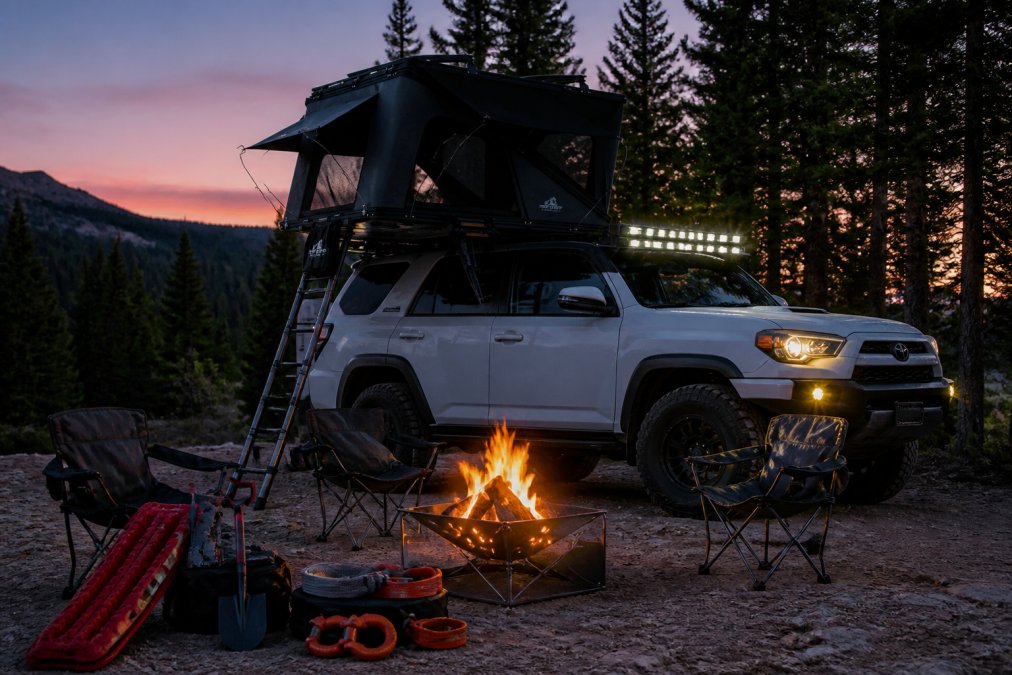
Setup takes 5-10 minutes: unfold the pit, position it on level ground away from vegetation, assemble the grate, and arrange cooking surfaces. Most pits accommodate standard camping cookware, Dutch ovens, griddles, and grill surfaces. Expect to burn 3-5 pounds of wood per evening in moderate conditions.
The 70L Overland Gear Box Gray ($245) complements your campfire pit setup by organizing cooking utensils, fuel starter materials, and ash management tools. Its waterproof seal protects contents during water crossings. Interior dimensions (21.75" L x 12" W x 12" H) accommodate cooking equipment and cleanup supplies.
Check local regulations before each trip. Many public lands prohibit open fires but allow enclosed portable pits. Some jurisdictions require fire pans beneath pits to contain embers.
Budget-Tier vs. Premium Build Paths: Where to Invest
Building an overlanding rig requires prioritizing spending across competing needs. Strategic spending creates a reliable platform for multi-day expeditions.
Budget-Tier Build Path ($8,000-12,000 total investment):
Start with essential recovery gear ($1,200): kinetic rope, shackles, recovery boards, and air compressor. Skip the winch initially. Add a mid-range suspension lift ($1,500) and Tuff Stuff Trailhead Pro rooftop tent ($1,500). Basic LED lighting ($600) covers essential trail visibility. Complete armor package ($1,200) protects drivetrain. Add a portable power station ($1,500) instead of a full auxiliary battery system. This path prioritizes reliability over features for multi-day expeditions on established trails with moderate technical difficulty.
Premium Build Path ($20,000-28,000 total investment):
Invest in comprehensive recovery capability ($2,500) including a 9,500-pound winch. Add a full suspension overhaul ($3,500) with complete coilover system and adjustable ride height. The Tuff Stuff Alpine 61 rooftop tent ($4,620) provides four-season capability. Comprehensive LED lighting system ($1,800) includes roof bar, spotlights, and fog lights. Complete armor package ($2,000). Install a lithium auxiliary battery system (200 amp-hours, $1,800). Add electronic locking differentials ($2,000). This path prioritizes capability for expedition-grade overlanding including technical rock crawling and multi-week trips.
Mid-Range Build Path ($14,000-18,000 total investment):
Include essential recovery gear ($1,500) without winch. Moderate suspension upgrade ($2,000) with quality shocks. Tuff Stuff Alpha rooftop tent ($3,603). Mid-range LED lighting ($1,000). Partial armor package ($1,200). Basic auxiliary battery system ($800). Manual locking differentials ($1,200). This configuration handles serious overlanding without premium pricing.
| Build Category | Budget-Tier | Mid-Range | Premium |
|---|---|---|---|
| Total Investment | $8-12K | $14-18K | $20-28K |
| Recovery Capability | Self-recovery | Self + limited assist | Full expedition |
| Suspension Performance | Improved ride | Tuned articulation | Adjustable everything |
| Rooftop Tent | Trailhead Pro | Alpha | Alpine 61 |
| Lighting System | Basic LED | Comprehensive | Advanced integrated |
| Electrical Capacity | Portable station | Basic auxiliary | Full dual battery |
| Locking Differentials | None | Manual | Electronic |
| Best For | Weekend trips | Extended overlanding | Expedition-grade |
The critical insight: don't spread budget evenly across all categories. Identify your primary overlanding scenarios and allocate accordingly. Recovery gear and suspension tuning deliver disproportionate value for technical terrain. Rooftop tents and lighting matter more for extended trips. Electrical capacity becomes essential only if you're running heavy auxiliary loads.
Building an overlanding rig for the 2026 Toyota 4Runner requires understanding how the new platform changes gear compatibility and weight distribution. The decisions you make now determine whether your rig performs reliably on remote trails or becomes a liability. Start with recovery capability and sleeping systems, then layer in lighting and electrical infrastructure. Your first expedition will reveal where your build excels and where adjustments matter.
Frequently Asked Questions
Q: What makes overlanding gear for the 2026 4Runner different from older models?
A: The 2026 4Runner uses a new platform with different suspension geometry, roof load ratings, and electrical architecture. Roof racks, lighting systems, and recovery point placements require 6th Gen-specific compatibility. Older gear may not mount correctly or may exceed the new model's payload capacity. Always verify compatibility with the 2026 platform before purchasing aftermarket accessories for your overlanding build.
Q: How do I balance weight and performance when building an overlanding 4Runner?
A: The 2026 4Runner has a maximum payload capacity of approximately 1,520 pounds. Prioritize lightweight aluminum recovery boards, composite skid plates, and lithium portable power stations over heavy steel alternatives. Mount heavier items like rooftop tents low and centered on the roof rack. Calculate total weight including passengers, fuel, and gear before each trip. Overloading reduces fuel efficiency, handling, and suspension performance on technical terrain.
Q: What off-road recovery gear essentials do I actually need for backcountry overlanding?
A: Essential recovery gear includes kinetic recovery ropes (rated for your vehicle's weight), recovery boards for traction on soft terrain, a winch with proper mounting points, and basic hand tools. Add a portable air compressor for tire pressure adjustments and a tire repair kit. For multi-day trips, include a dual battery system or portable power station to run auxiliary lighting and recovery equipment. Test all recovery gear before heading to remote areas where help is hours away.
Q: Are rooftop tents worth the investment for overlanding trips?
A: Rooftop tents eliminate ground-level exposure to moisture, insects, and uneven terrain, making them ideal for extended overlanding expeditions. The Tuff Stuff Alpine 61 ($4,620) deploys in under 60 seconds and handles four-season conditions. Budget options like the Tuff Stuff Trailhead Pro ($1,500) still offer durability and quick setup. If you plan frequent multi-day trips, a rooftop tent pays for itself in comfort and camp setup speed. For occasional weekend trips, a ground tent may suffice.
Q: How do I choose between budget and premium overlanding gear builds?
A: Budget builds ($3,000-$6,000 total) prioritize essentials: basic suspension lift, skid plates, recovery gear, and a mid-range rooftop tent. Premium builds ($10,000+) add auxiliary lighting, dual battery systems, winch upgrades, and high-end suspension tuning. Start with recovery essentials and basecamp comfort (tent, storage, power), then add performance upgrades. Buy once from trusted brands to avoid replacing failed gear on the trail.
Q: What overland lighting solutions are best for SUVs like the 2026 4Runner?
A: Auxiliary lighting upgrades include LED light bars mounted to the roof rack or bumper, and rock lights for ground visibility around camp. Precision Upgrades provides high-performance LED lighting designed for overlanding rigs, with weatherproof seals to prevent moisture intrusion. Choose color temperature between 5,000K and 6,500K for natural daylight visibility on technical terrain. Pair with a dual battery system to run lights without draining the main battery during multi-day camps.
Q: Do I need a roof rack for overlanding with a 4Runner?
A: A roof rack is essential for overlanding if you plan to carry a rooftop tent, storage boxes, or auxiliary lighting. The 2026 4Runner's roof load rating is approximately 150 pounds, so a quality aluminum rack rated for that capacity is critical. Roof racks also provide mounting points for recovery gear and awnings. If you're only doing day trips with ground-level storage, a roof rack is optional. For multi-day expeditions, it's a foundational component of your overland rig.
This article was written using GrandRanker