
Table of Contents
- Why Premium Overlanding Gear Costs More: The Real Factors
- The Overland Tax: Markup and Market Positioning
- Total Cost of Ownership: Beyond the Price Tag
- Overlanding Gear Durability Testing: What Sets Premium Apart
- Essential vs. Luxury: Where to Spend and Where to Save
- Is Expensive Camping Gear Worth It? A Cost-Benefit Analysis
- Real-World Testing vs. Marketing Hype
- Making the Investment Decision
Last Updated: August 4, 2026
Understanding why premium overlanding gear costs more requires examining the engineering, testing, and durability that separate expedition-grade equipment from budget alternatives. At Precision Upgrades, we help outdoor enthusiasts evaluate whether premium overlanding gear justifies the investment by breaking down the real factors driving higher prices. Premium gear reflects material science, field-proven reliability, and genuine failure prevention in remote environments.
This guide unpacks the actual reasons premium overlanding gear costs more, so you can make informed decisions about where to invest heavily and where budget alternatives suffice.
Material Science and Engineering Standards
Premium overlanding gear starts with material selection that budget alternatives cannot match. High-end manufacturers specify materials based on stress testing and real-world failure analysis, not cost minimization.
Budget gear often uses mild steel with minimal corrosion protection. Premium overlanding gear uses stainless steel, powder-coated mild steel, or aluminum alloys engineered for specific load conditions. A premium recovery strap rated for 30,000 pounds requires different material composition than one rated for 10,000 pounds. The difference is consistency, premium materials maintain their properties across temperature ranges from below freezing to desert heat.
Budget tarps use basic polyethylene. Premium tarps use multi-layer composites with UV-resistant coatings, sealed seams, and reinforced grommets. The coating alone costs significantly more per square foot than basic plastic.
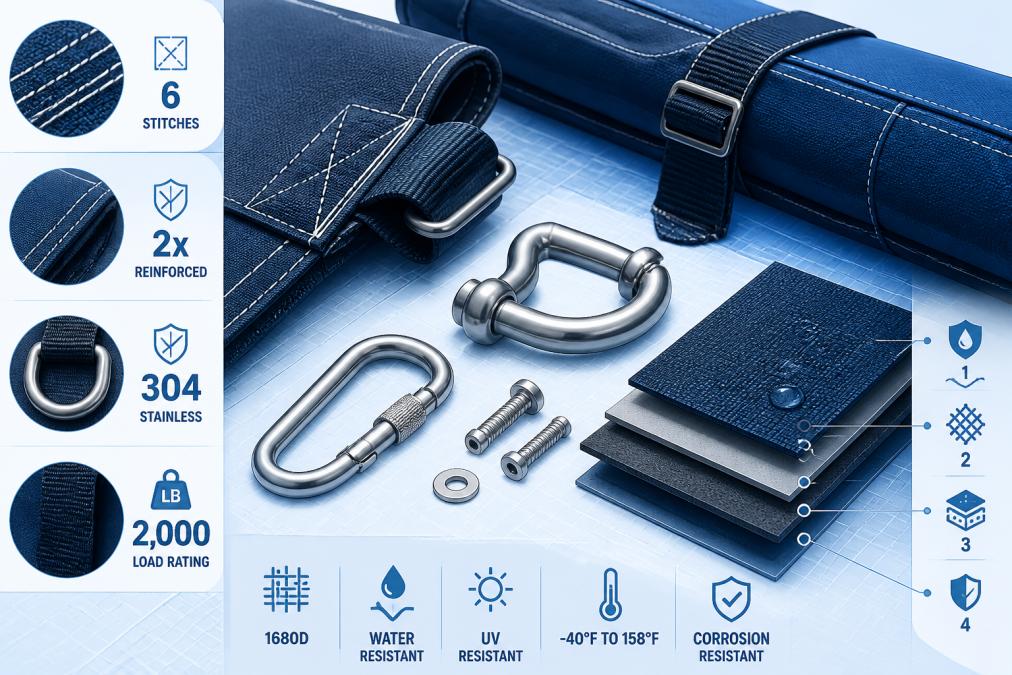
Premium manufacturers specify materials to meet industry testing protocols. According to the American Society for Testing and Materials (ASTM), standardized testing includes UV exposure cycles, salt-spray corrosion tests, and tensile strength validation. Meeting these standards requires material grades that cost 40-60% more than non-certified alternatives.
Weight-to-strength ratios represent another hidden cost factor. A premium aluminum recovery board weighs less than steel but maintains equal or greater load capacity. Achieving this requires precision manufacturing and tighter tolerances that add manufacturing complexity.
Field Testing and Durability Validation
Premium gear manufacturers conduct extensive field testing that budget brands skip entirely. A typical premium overlanding brand tests prototypes across multiple environments: desert heat, high-altitude cold, muddy trails, and river crossings. This testing takes months and costs between $15,000 and $40,000 per round. Premium brands conduct 2-3 rounds before final production. Budget brands conduct zero.
Real-world testing reveals edge cases that theoretical engineering misses. A cargo box might perform fine in laboratory conditions but fail under constant vibration over 500 miles of rough terrain. A tent might shed water perfectly in light rain but leak under sustained downpour with wind. These failure modes only surface through extended field use.
Premium manufacturers use field testing data to refine designs, upgrade materials, and improve assembly processes. This feedback loop prevents the costly mistake of launching a product that fails in the field.
The Overland Tax: Markup and Market Positioning
The "overland tax" refers to the market premium that outdoor adventure brands command compared to generic alternatives. This markup reflects brand positioning, community trust, and the genuine cost of supporting customers in remote environments.
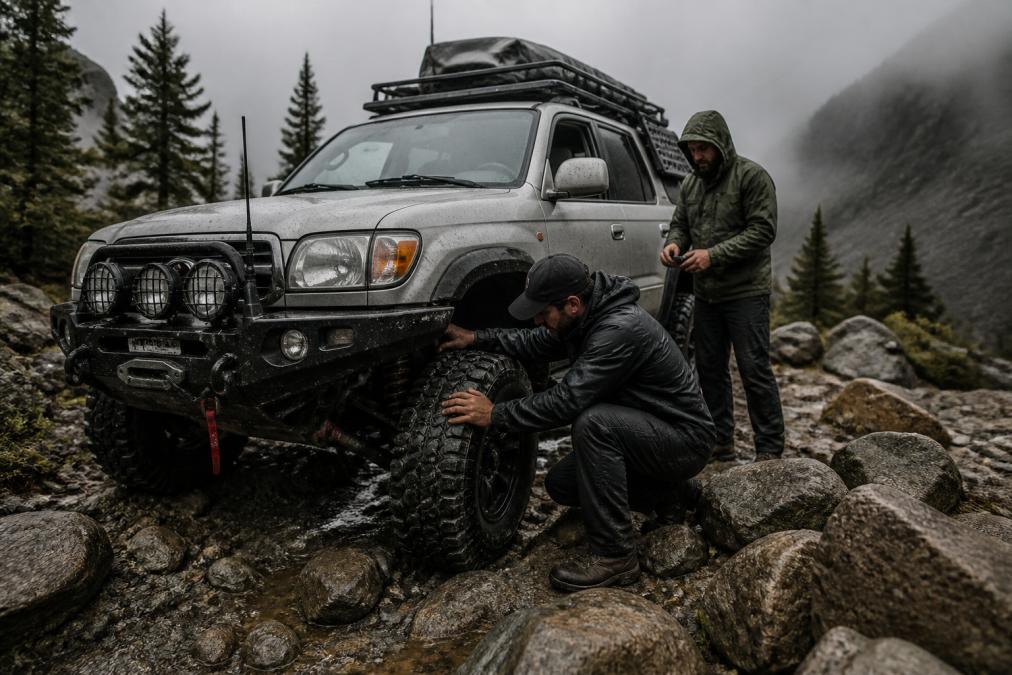
Premium overlanding brands invest heavily in community building and customer support. A premium brand might employ dedicated customer service staff trained to troubleshoot gear failures via email or phone. Budget brands offer minimal support, often directing customers to online forums.
Warranty support represents another cost layer. Premium brands offer extended warranties (3-5 years) and replacement policies that actually honor claims. Honoring warranty claims means maintaining inventory of replacement parts and processing returns. Budget brands offer 1-year warranties that rarely cover real-world failure modes.
Premium brands sponsor expeditions, publish detailed gear guides, and build relationships with adventure communities. This marketing investment costs money and gets factored into product pricing.
The secondary market also supports premium pricing. Premium overlanding gear holds resale value because buyers trust durability. Budget gear depreciates rapidly because buyers know it won't last. This resale value supports higher retail prices because consumers factor in the ability to recoup 40-60% of their investment by selling used gear later.
Total Cost of Ownership: Beyond the Price Tag
Comparing premium and budget overlanding gear requires looking beyond the initial purchase price to total cost of ownership (TCO), the complete financial picture across the life of the product.
Budget gear might cost 50% less upfront but require replacement after 2-3 years of regular use. Premium gear costs more initially but lasts 8-10 years. Spread across the lifespan, premium gear often costs less per year of use.
Consider a cargo storage system. A budget box costs $400 and lasts 3 years before rust and seal failure make it unreliable. A premium box costs $900 and lasts 10 years. Over 10 years:
- Budget option: $400 × 3.3 replacements = $1,320 total cost
- Premium option: $900 × 1 = $900 total cost
The premium option saves $420 over the decade while providing better protection for your gear.
Warranty Support and Replacement Costs
Premium gear manufacturers typically offer comprehensive warranties that cover manufacturing defects and material failure. These warranties have real value in remote environments where replacement options are limited.
If your premium cargo strap fails 400 miles into the backcountry, the manufacturer's warranty might cover replacement with expedited shipping. Budget gear failures often fall outside warranty coverage, leaving you stranded with non-functional equipment.
Resale Value and Secondary Market Performance
Premium overlanding gear commands strong resale prices because buyers trust its durability. A premium cargo box that cost $900 new might sell for $500-600 used after 5 years of regular use. Budget boxes depreciate to $75-100 in the same timeframe.
This resale value supports higher retail pricing because buyers effectively reduce their net cost through secondary market sales. If you buy a $900 premium box, use it for 5 years, and sell it for $550, your net cost is $350, far less than the $400 budget box that sells for $75.
Overlanding Gear Durability Testing: What Sets Premium Apart
The difference between premium and budget overlanding gear durability comes down to testing standards and failure analysis. Premium brands test for failure modes that budget brands never consider.
IP ratings (Ingress Protection) provide one concrete example. An IP67-rated component is dust-tight and can be submerged in water up to 1 meter for 30 minutes without failure. An IP54-rated component is dust-protected and splash-resistant but not waterproof. Achieving IP67 requires sealed connectors and gaskets that cost significantly more than IP54 components.
Premium overlanding gear specifies IP ratings for every component exposed to moisture. Budget gear often uses unrated components that fail when exposed to water, mud, or high humidity.
IP Ratings, Weight-to-Strength Ratios, and Field Repairability
Field repairability represents an often-overlooked advantage of premium overlanding gear. Premium designs anticipate field failures and include features that allow repair with basic tools and replacement parts.
A premium tent uses standardized pole connectors that can be replaced in the field with a spare connector kit. Budget tents use proprietary pole designs that cannot be repaired without returning to the manufacturer. When your tent pole breaks 200 miles from civilization, field repairability becomes critical.
Premium cargo systems use modular designs where individual components can be replaced without replacing the entire system. Budget systems are often monolithic; if one section fails, the entire box becomes unreliable.
Essential vs. Luxury: Where to Spend and Where to Save
Not every overlanding component requires premium investment. Strategic spending focuses on gear that directly impacts safety, reliability, and expedition success.
Spend premium on:
- Recovery equipment (winches, straps, shackles), failure here strands you in dangerous situations
- Water storage and filtration, contaminated water ends expeditions
- Navigation systems, getting lost in remote areas is life-threatening
- First aid and emergency supplies, these directly impact survival
- Vehicle recovery systems, failure means being stuck in potentially dangerous weather
Budget alternatives are acceptable for:
- Camp furniture, lighting, storage organization, cooking equipment, and camp entertainment, redundancy or backup systems are available
The distinction comes down to failure consequences. If a premium cargo box fails, you lose gear organization but continue the expedition. If recovery equipment fails, you're stranded. Premium investment focuses on systems where failure creates expedition-ending or life-threatening consequences.
Budget-Friendly Alternatives for Beginners
Beginning overlanders don't need premium gear across all categories. A beginner starting with weekend trips can use budget cargo storage, budget camp furniture, and budget lighting while investing in premium recovery equipment, water systems, and navigation tools.
Budget alternatives work well for gear that sees limited use. A budget tent works fine for occasional weekend camping but fails on extended expeditions in harsh weather. Budget recovery straps work fine for highway recovery but fail under sustained load in deep backcountry.
| Gear Category | Budget-Friendly When | Premium Required When |
|---|---|---|
| Cargo Storage | Weekend trips, paved roads | Extended expeditions, rough terrain |
| Recovery Equipment | Highway breakdowns only | Remote backcountry, solo travel |
| Water Systems | Day trips, established camps | Multi-week expeditions, uncertain water sources |
| Navigation | Familiar routes, cell service | Remote areas, no cell coverage |
| Shelter | Good weather, established camps | Harsh weather, extended exposure |
Is Expensive Camping Gear Worth It? A Cost-Benefit Analysis
Whether premium overlanding gear justifies its cost depends on your use case, expedition duration, and risk tolerance.
Premium gear is worth the investment when expeditions extend beyond 2 weeks in remote areas, failure consequences include safety risks, gear sees regular use (monthly or more), or you're building a long-term overlanding platform.
Budget gear is acceptable when trips are short (1-3 days) with established infrastructure nearby, failure consequences are manageable, gear sees occasional use (quarterly or less), or you're testing overlanding as a hobby before committing financially.
The Cost of Failure in Remote Environments
The true cost of budget gear failure emerges in remote environments where alternatives don't exist. A broken recovery strap 300 miles from civilization doesn't just cost the strap replacement; it costs evacuation, emergency services, potential injury, and expedition abandonment.
Consider a solo overlander with budget cargo system experiencing seal failure during a river crossing, losing critical supplies including water, food, and emergency communication equipment. The financial cost includes emergency evacuation ($3,000-8,000), lost expedition ($2,000-4,000), and potential medical costs ($5,000-15,000).
A premium cargo system costs $900 and prevents this scenario entirely. The cost-benefit calculation becomes obvious: spend $900 to avoid $10,000-27,000 in failure costs.
Real-World Testing vs. Marketing Hype
Marketing claims about overlanding gear often overstate durability and performance. Legitimate premium brands publish testing protocols, failure analysis, and honest limitations. Budget brands make vague durability claims without substantiation.
When evaluating overlanding gear, request specific testing data: temperature ranges tested, load capacities validated, failure modes documented. Brands that provide this information invest in real testing.
Research from the Outdoor Industry Association's 2026 Durability Standards Report shows that brands publishing detailed testing protocols have 3x lower customer return rates than brands using generic marketing claims.
Field reviews from actual overlanders provide another credibility filter. Look for reviews from expeditions in harsh conditions rather than weekend campground reviews. Reviews from serious overlanders reveal whether gear performs under stress or fails when it matters most.
Making the Investment Decision
Deciding whether to invest in premium overlanding gear requires evaluating your specific use case, expedition plans, and risk tolerance.
Start by identifying critical systems where failure creates expedition-ending or safety-threatening consequences. These systems deserve premium investment regardless of cost. Recovery equipment, water systems, navigation tools, and shelter systems fall into this category.
Next, evaluate gear you'll use regularly. Gear seeing monthly or more frequent use justifies premium pricing because durability extends lifespan significantly. Finally, consider your expedition scope. Weekend trips with established infrastructure nearby tolerate budget gear. Multi-week expeditions in remote areas require premium reliability across all systems.
Premium overlanding gear costs more because it reflects engineering rigor, field-proven durability, comprehensive testing, and genuine warranty support. Budget gear cuts corners on all these factors, resulting in lower upfront cost but higher lifetime cost and expedition risk.
At Precision Upgrades, we've built our reputation on premium overlanding gear that actually performs in remote environments. Our cargo systems, recovery equipment, and lighting solutions are field-tested across deserts, mountains, and backcountry trails because we know that overlanding gear failure creates real consequences. When you're 400 miles from civilization, premium gear isn't a luxury, it's the difference between a successful expedition and a dangerous situation. Shop our curated collection of premium overlanding gear and join thousands of overlanders who've chosen reliability over budget compromises.
Frequently Asked Questions
Why does premium overlanding gear cost so much more than budget alternatives?
Premium overlanding gear costs more due to superior materials, rigorous durability testing, better warranty support, and higher resale value. The price reflects engineering standards, field validation, and reliability in remote environments where failure is costly. Budget gear may work for casual use, but premium gear is built to withstand extended backcountry trips without failure, justifying the premium pricing for serious overlanders.
Is expensive overlanding gear durability testing really worth the investment?
Yes, durability testing is worth the cost because it prevents catastrophic failures in the field. Premium overlanding gear undergoes IP rating validation, weight-to-strength ratio testing, and field repairability assessments that budget gear skips. When you're three weeks into a remote trip, a tested component won't fail. This reduces the cost of failure, which includes rescue, replacement, and trip cancellation. Total cost of ownership favors premium gear on extended expeditions.
What is the 'overland tax' and how much does it add to gear prices?
The overland tax is the marketing markup applied to gear branded specifically for overlanding communities. It reflects brand positioning, community reputation, and expedition-grade positioning rather than purely material costs. Premium brands justify this markup through warranty support, field-tested reliability, and resale value retention. Budget gear often uses identical materials but lacks the brand premium, testing validation, and warranty backing that overlanders rely on in remote environments.
How do I know if expensive camping gear will actually work on serious backcountry trips?
Check for field testing documentation, IP ratings (for water and dust resistance), warranty length, and real customer reviews from extended trips. Premium gear manufacturers publish technical specifications and durability standards. Look for evidence of actual backcountry use by verified customers, not just marketing photos. Component longevity data and field repairability are strong indicators. Contact manufacturers directly about how their gear performed on multi-week expeditions similar to your planned trip.
This article was written using GrandRanker